Resilience Strengthens Tourism Regions for Change
- 09.11.2026
- Event Review

Bei der Podiumsdiskussion des Abschlusskongress „Resilienter Tourismus“ diskutierten die Expert:innen aus Wissenschaft und Praxis über Verantwortung und Handlungsspielräume.
How can tourism regions respond to climate change, technological developments, and societal shifts? Experts from academia and the tourism industry explored this question at the final conference of the Interreg project “Resilient Tourism” at HOK | University of Applied Sciences Tirol.
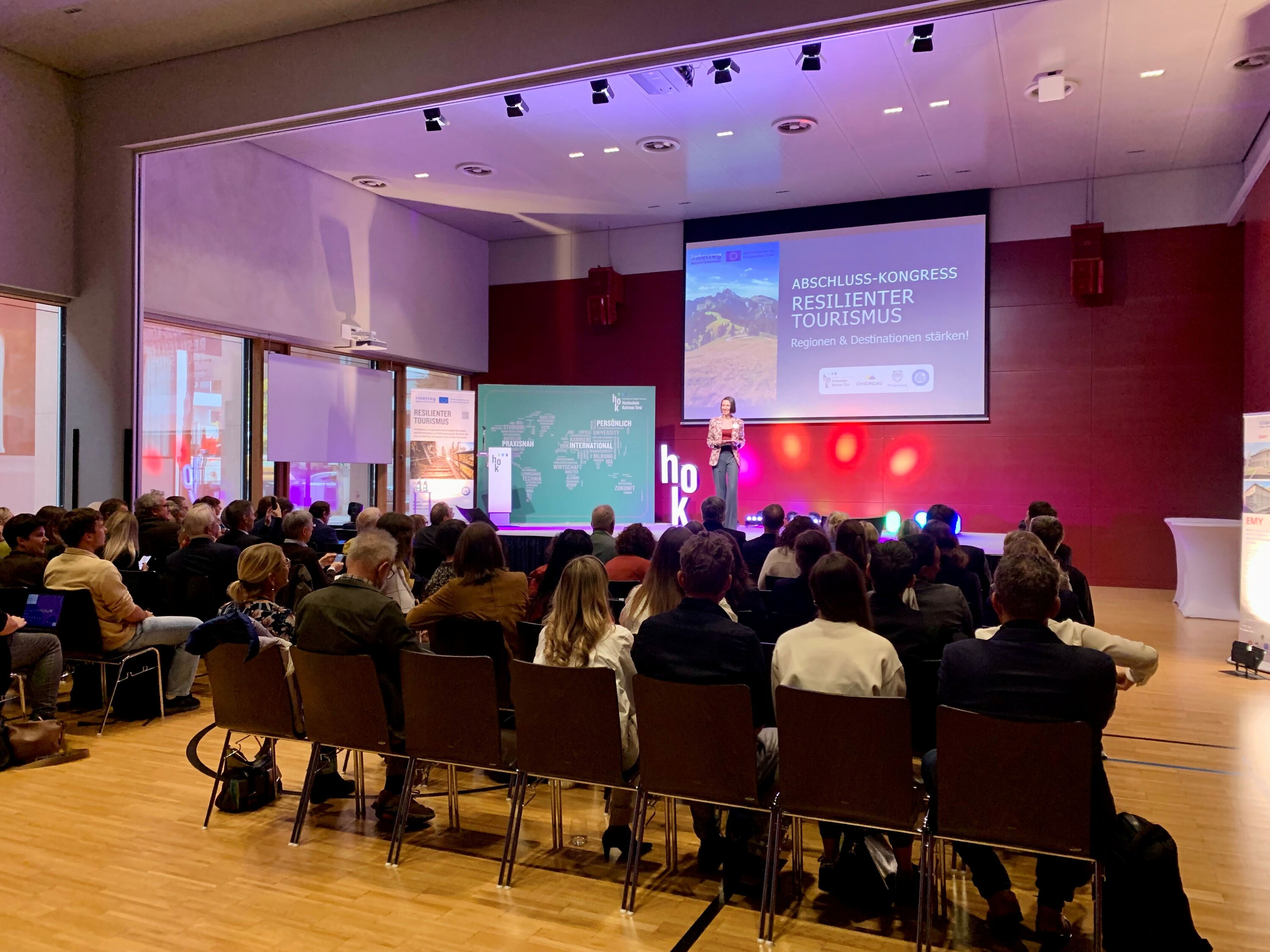
Tourism regions face a wide range of challenges. Climate change is altering natural conditions, technological developments are creating new opportunities and demands, and the expectations of visitors and local communities are evolving. How destinations can respond to these changes and prepare for the long term was the focus of the conference “Resilient Tourism – Strengthening Regions & Destinations,” held at HOK on October 21, 2026.
The conference marked the conclusion of an event series held as part of the Interreg project, which began in Traunstein in 2024 and continued in Salzburg in 2025. While the first two events focused on people and employees, followed by businesses and organizations, the Kufstein conference shifted the focus to regions and destinations and how they can remain sustainable and resilient in the face of changing conditions.
Resilience Requires Collaboration
Resilience describes the ability to cope with crises and change, adapt effectively, and emerge stronger. For tourism regions, this means looking beyond immediate crises to proactively anticipate future developments. Univ.-Prof. Dr. Gottfried Tappeiner examined this adaptability through three lenses: the natural environment, technological advancement, and social cohesion.

Assistant Professor Dr. Robert Steiger will speak at a panel discussion in the Festivity Hall of HOK about climate change in tourism.
Heatwaves, heavy rainfall, and declining snowfall present serious challenges for destinations, as do shifts in mobility, digitalization, and market demands. Individual businesses cannot handle these shifts alone; successful adaptation requires cross-sector collaboration and long-term planning. This includes measures such as flood protection, reliable drinking water infrastructure, and a more diversified tourism portfolio that is less dependent on specific peak seasons. Public participation and regional solidarity also play a vital role.
Assoc. Prof. Dr. Robert Steiger detailed the profound impact of climate change on the tourism sector. Rising temperatures, shifting precipitation patterns, and more frequent extreme weather events affect infrastructure and accessibility as much as offerings, demand, and overall competitiveness. This is particularly evident in winter tourism, where shorter ski seasons and reduced snow reliability increase the pressure to adapt. While technical snowmaking and snow farming can help secure seasons, they are not comprehensive long-term solutions. Redesigning ski areas and offering snow-independent winter activities are becoming increasingly important.

The speakers together with the project team of the Interreg project “Resilient Tourism.”
At the same time, tourism is not only impacted by climate change but also contributes to it through emissions. Consequently, the industry must be an active part of the transition toward climate neutrality. Steiger views tourism as a potential "change agent"—a driving force capable of actively shaping and advancing sustainable transformation.
New Perspectives for Affected Regions
Univ.-Prof. Dr. Ulrike Pröbstl-Haider illustrated what such a transformation can look like in practice using the example of Lackenhof in Lower Austria. Ahead of the Kufstein congress, she addressed this topic in an interview with Top Tirol titled "Climate Change: How Resilient is Tyrolean Tourism?". At the congress, she expanded on this framework and demonstrated through the Lackenhof case study how affected destinations can adjust to shifting conditions. There, traditional ski operations are no longer sustainable in the long run due to climate change and declining visitor numbers. The region is therefore exploring viable strategic alternatives beyond winter sports.
Discussions focus on a stronger emphasis on summer tourism and nature recreation, developing into a climate-learning or energy-transition model region, as well as digital solutions and the adaptive reuse of vacant buildings. Engaging the local population is crucial to this process. "A viable transformation process begins with involving the local community from the very start. Opportunities for co-determination and active involvement are essential, as sustainable developments build upon local conditions and community visions," emphasized Pröbstl-Haider. Incremental adjustments are often more realistic and effective than attempting a single major leap.
"A viable transformation process begins with involving the local community from the very start. Opportunities for co-determination and active involvement are essential, as sustainable developments build upon local conditions and community visions"
Ulrike Pröbstl-Haider
Expert in Sustainable Tourism
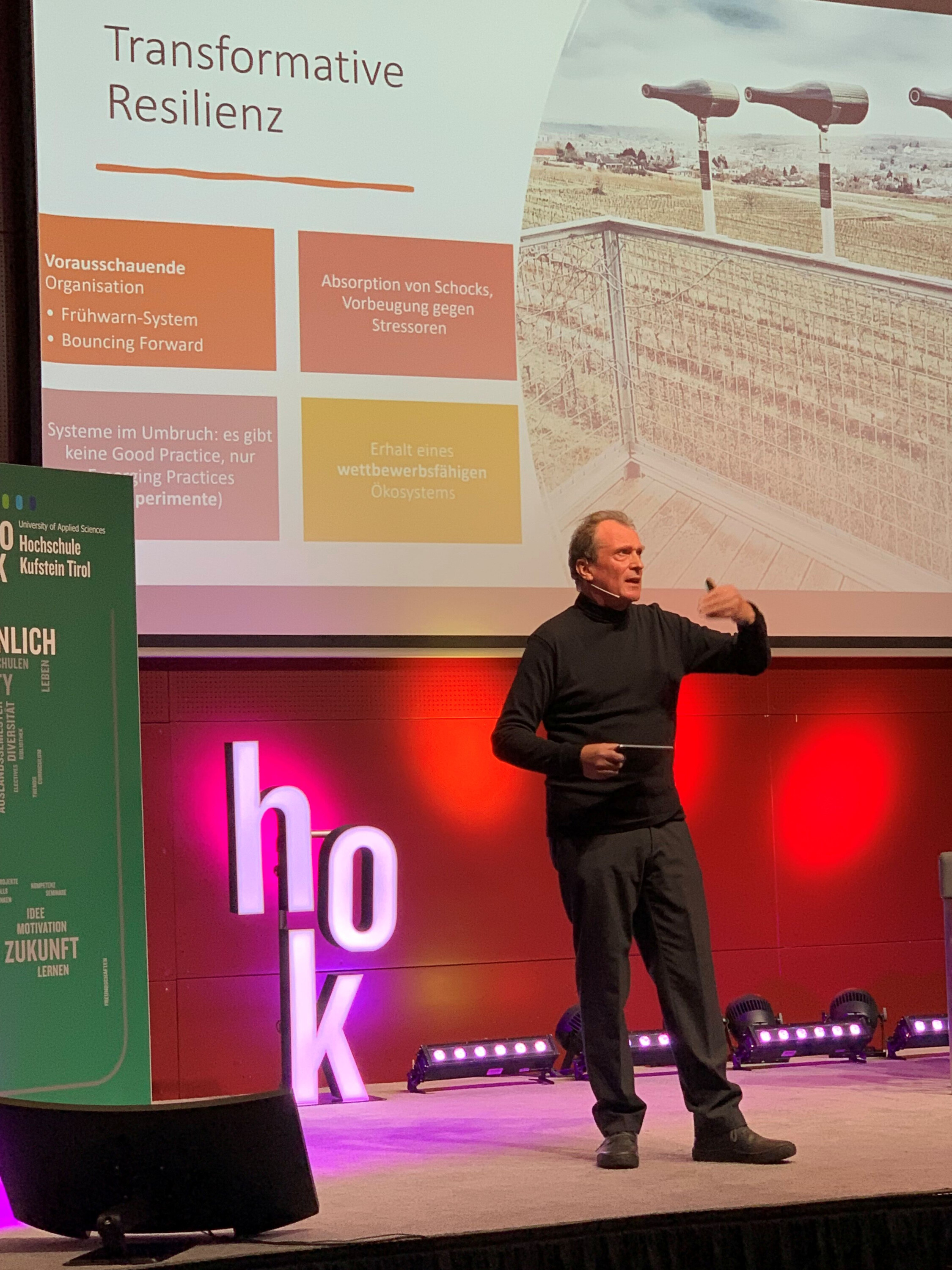
Mag. Andreas Reiter highlighted that these processes involve more than just reacting to individual crises; they require foundational development through the concept of transformative resilience. This refers to a region’s capacity not only to cushion shocks but to adapt its underlying structures to better withstand future challenges. Key to this approach is identifying risks early, anticipating developments, and taking timely corrective action.
This responsibility does not rest with a single entity. Because tourism relies on public spaces and regional resources, diverse stakeholders must contribute to destination development. Reiter sees destination management organizations (DMOs) and tourism businesses as holding a key responsibility to actively shape their region's future, with the ultimate goal of creating a resilient regional network that remains competitive over the long term.
Destinations Must Actively Shape Their Future
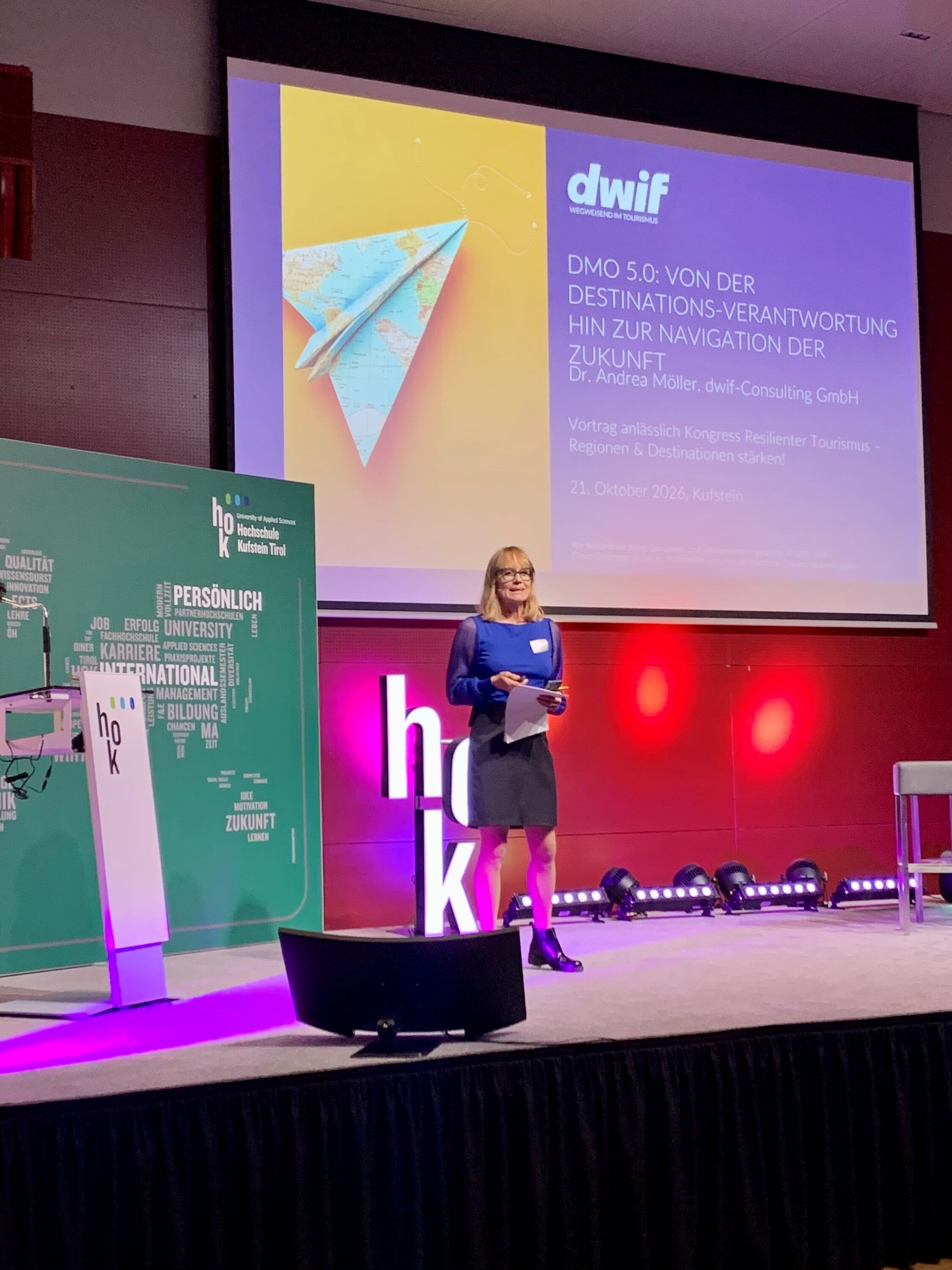
The evolving role of destination management organizations was also central to the presentation by Dr. Andrea Möller. Using the term "DMO 5.0," she outlined a shifted self-understanding for these entities: Rather than solely marketing a destination and informing visitors, they should actively guide regional development. This requires building new competencies, maintaining a forward-looking perspective, and implementing strategies that advance tourism responsibly.
Regenerative tourism is an integral part of this vision. It shifts the focus from merely minimizing negative impacts to generating positive value for the host region. New business models and artificial intelligence can play key roles. AI can automate routine tasks, freeing up operational capacity for DMOs to focus on strategic destination management.
Following the keynotes, the speakers joined Benjamin Türkis from Innsbruck Tourism for a panel discussion moderated by Larissa Schütz. The discussion focused on how to safeguard existing assets while driving structural change, addressing who can initiate transformation and take accountability—from DMOs and businesses to policymakers, local residents, and visitors.
Links:
- Resilient Tourism | Research Project
- Resilient Tourism Conference: Presentations, October 21, 2026