Our full-time, English-language master’s program equips you for the future of product development. Acquire the skills to create connected products and design cutting-edge business models. Take an active role in shaping the future of smart technologies!

Smart Products & AI-driven Development
Master's degree program
Overview
-
Qualification Level:
Stufe 2, Master -
Price:
Euro 363,36* (excl. Student Union-fees) each semester -
Academic Degree:
Master of Science in Engineering (MSc) -
Academic Program:
Full-time -
Language:
100 % English -
Remote Options:
E-Learning max. 30 % online -
Exchange Semester:
Supervised one-week study trip abroad in the 2nd semester** -
Admission Requirements:
Specific admission requirements -
Study Places per Year:
30
Study program accredited by the Agency for Quality Assurance and Accreditation Austria

Program Description


Discover the Future of Product Development! Our Master in Smart Products & AI-driven Development teaches you how companies can use AI to develop intelligent products. We combine technology, management, and soft skills in an interdisciplinary and practical way. Apply your knowledge through exciting projects and become a leader in AI-driven product innovation.
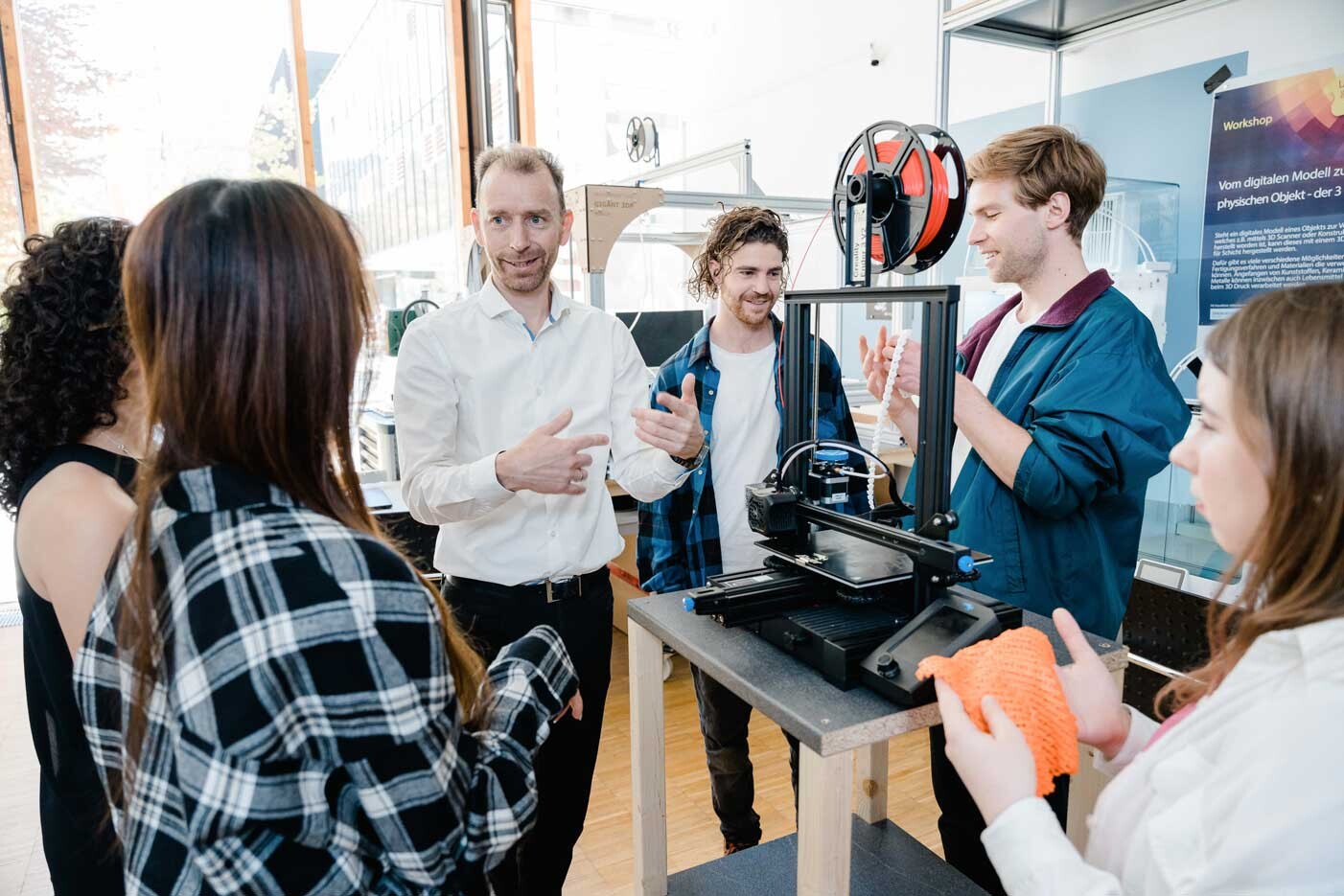
The master's degree program in Smart Products & AI-driven Development blends technical and business expertise to create intelligent, connected products. It emphasizes the practical use of cutting-edge AI technologies, including generative language models, edge computing, and machine learning, for system analysis and prediction. The curriculum, delivered entirely in English, equips students for global careers and is designed with a strong practical focus through project-based learning. Students gain hands-on experience with advanced technologies like additive manufacturing, fostering a practical approach. The program's interdisciplinary nature enhances students' skills in integrating AI into product development and crafting intelligent, service-oriented solutions.
Study Focus
-
31 %
Expertise in Product Development & Management
-
15 %
Expertise in data management
-
17 %
Expertise in digital transformation management
-
9 %
Subject-specific specializations & electives
-
28 %
Practical transfer, international skills & master's thesis
What You Will Learn
-
Developing intelligent, networked products
-
Using AI for product development and lifecycle
-
Mastering production, programming and data analysis
-
Developing project management skills
-
Applying system analysis and problem solving
-
Interdisciplinary work in international teams
Popular Occupational Fields
- Product developer for intelligent products and solutions
- Technical project manager and developer of smart products
- Innovation and technology manager in the field of digitalization
- Experts in the field of Internet of Things
Career Opportunities
-
53.200,00 EUR average starting salary
for product developers in the industry
-
400 vacancies
for product developers in German-speaking countries
-
65 % of the companies
see the shortage of skilled workers as the biggest hurdle to digitization
-
12.64 % annual growth rate
in the area of the Internet of Things
-
51 % of Austrian companies
use the Internet of Things
The path to the Master's degree

Your path to the master's degree in Smart Products & AI-driven Development is clearly structured: The first two semesters focus on methodological knowledge and its practical implementation in AI-driven product development. In the third semester, you will set individual priorities and acquire additional certificates. The fourth semester is dedicated to your master's thesis and the final exam.
Special features:
-
Method-oriented and project-based teaching
-
Practice-oriented teaching with state-of-the-art tools and methods
-
Additional professional certificates in the areas of project management, artificial intelligence and IoT
Recognition of Prior Learning
Students have the option to receive credit for skills and competencies they have already acquired before the start of each semester.
To apply for credit, they must submit a request directly to the Director of Studies.
Director of Studies

Prof. (FH) Dr. Martin Adam
Director of Studies Bachelor Drone Engineering, Industrial Engineering & Management | Master ERP-Systems & Business Process Management, Master Smart Products & AI-driven Development
Curriculum
Course
Semester
ECTS
• Programming languages (classification, principles, history)
• Detailed consideration of a modern programming language (e.g. Phyton)
• Overview and selection of a coding assistant
• Structure of programs
• Data types, operators, flow structures
• Development environment
• Typical work steps
• Setting up the development environment
• AI enabled Programming (input, debugging, execution)
• Independent planning and programming based on the programming languages taught in the lecture
• Development of AI-enhanced programs
• Fundamentals of data transmission
• Wired data transmission
• Wireless communication
• Technologies and applications of modern networks
• OSI, hybrid and TCP/IP reference model
• Wired data transmission (I2C communication, serial communication)
• Wireless networks
• Sensor networks and approaches (e.g. MANET, WMN)
• End-to-end protocols: UDP, TCP
• Selected protocols of the application layer (e.g. FTP, HTTP, HTTPS, SMTP, MQTT)
• Security concepts and access procedures
• Release updates for networks
• Elements of a measurement report
• Selection of transmission technologies and protocols
• Introduction (data, information, knowledge, temporal components, objectives)
• Data process (collection, preparation, analysis, presentation)
• Data preparation (cleansing, transformation, rescaling, storage)
• Approaches for the analysis of data
• Presentation/visualization of results
• Software (open source and proprietary software)
• Machine Learning - process, approaches, implementation
• Introduction to the software used e.g. Python
• Collecting and preparing data using software
• Analysis and presentation of sample data using various approaches (e.g. regression, decision trees, etc.)
Course
Semester
ECTS
• Overview of terms and definitions
• Basic algorithms and models
• Identification and evaluation of application areas in the context of the product development process of smart products
• Limitations of AI
• Generation and modification of texts
• Generation and modification of images and videos
• Audio generation and modification
• Prompting strategies (e.g. retrieval augmented prompting)
• Use and interaction with AI
• Local vs. Hosted AI Models
• Quality assurance of AI models
• Ethical considerations and implications when using AI models
• Limitations of different models and strategies
• Digital trends and waves of change
• Difference between digital and traditional companies or their development paths
• Design levels, framework conditions and challenges of digital change
• Frameworks for the assessment of digital maturity
• Smart products
• Development
• Ecosystem IoT and data
• Use cases of smart products and solutions
• Importance of change management
• Individual and social aspects of change
• Resistance, conflict and crisis
• Basic approaches to change management
• Types of change
• Models of change (e.g. Lewin, GE-CAP, etc.)
• (Project) management of change: Generic phase
• Models of change (e.g. Lewin, GE-CAP, etc.)
• (Project) management of change: Generic phase model and integration in projects
• Techniques and tools of change (e.g: Target circle, change stretch, WIIFM, empathy map, etc.)
• Fundamentals of the digital economy and trends
• Digital business models
• Importance of data
• Approaches to developing strategies, business models and business process models
• Business plans
• Risk reduction/implementation
• Introduction to data protection and its implementation
• Definitions: personal data, data registers, publicly accessible data, pseudonymization
• Informational self-determination, laws and regulations on data protection
• Rights of those concerned
• Organizational measures for the protection of personal data
• Criminal/civil law aspects: Trade secrets, refusal to testify
• Introduction to ethics as the science of good and right decisions and actions
• Relevant factors of ethical judgement
• Methods of ethical argumentation
• Concept of responsibility
• Business and technical ethics as sub-disciplines of ethics
• Ethical challenges in digitalized and global information and knowledge societies
• Effects of technological change on work life balance and family
Course
Semester
ECTS
• Introduction to digital twins, their importance and areas of application
• Communication of the theoretical principles and methods of modeling
• Overview of simulation techniques and their typical applications
• Getting to know various simulation software and practical exercises
• Creating and analyzing models for smart, communicating products
• Integration of digital twins into IoT systems and their advantages
• Introduction to advanced topics such as condition monitoring and predictive maintenance
• Discussion about the role of digital twins in future technology development.
• Planning and implementing your own digital twin project to apply what you have learned
• Fundamentals of Human–AI Interaction
• Human cognition, mental models, decision-making behavior
• HCI principles for AI systems
• UX Design for AI
• Interaction patterns (conversational UI, agents, multimodal interfaces)
• Prompt design, system messages, feedback loops
• Trust and user acceptance
• Human-in-the-Loop & Human-on-the-Loop
• Alignment of human–machine roles
• Task distribution, limits of automation
• Error prevention & recovery design
• Empathetic & Social Aspects of AI Interaction
• Social responses, trust
• Persuasive and adaptive systems
• Methods & Tools
• Usability testing for AI systems
• Prototyping tools
• Evaluation methods (task success, trust metrics, cognitive load)
• Basics of Descriptive Statistics
• Measurement System Analysis
• Sampling
• Statistical Process Control
• Process Control Charts
• Process Capability Analysis
• Components of Variants Analysis (COV)
• Repetition Basics of Concluding Statistics
• Failure Cause Determination via Hypothesis Testing (T-test, Chi-Sq, ANOVA) * Multiple Regression Analysis
• Evaluation tools with visual orientation, e.g. Bl tools such as MS PowerBl, Tableau, QlikView
• Display libraries, e.g. matplotlib. pyplot, gglot2
• Rules of visual communication, e.g. Hichert SUCCESSSS
• New technologies in the field of AI Engineering
• Trends in the field of programming languages for AI
• New design concepts in the field of AI
• New questions in the field of research in AI
• New questions in the field of AI practice
• New technologies in the field of Big Data Processing
• Trends in programming languages in data analysis
• New concepts of data processing (e.g. Data Lake)
• New questions in the field of data science research
• New questions in data science practice
• Current best practice approaches and concepts in application areas (e.g. Smart Home, Smart City, Smart Production, Connected Vehicles, etc.)
• Current best practice approaches with regard to development processes and tools
• Current research and development activities or research and development results
Course
Semester
ECTS
• IoT architecture (e.g. reference models)
• Requirements for IOT systems
• IoT data transmission protocols
• Use of IoT in an industrial context (examples)
• Basics of sensor technology
• Basics of embedded systems
• Procedure for implementing IOT systems
• Prototypical implementation of IOT systems
• Selection of sensors
• Collection, visualization and evaluation of data
• Implementation challenges
• Presentation of different user-oriented analysis platforms (e.g. KNIME, RapidMiner, Grafana)
• Presentation of different cloud solutions for data analysis (e.g. Google Cloud, AWS, Azure)
• Application of the platforms presented using the example of analysis data sets
• Discussion of the different approaches
• personnel deployment planning and resource management
• contract management and finance management (cost and activity accounting)
• quality management and quality assurance (reviews, audits, etc.)
• staff information and communication; IT strategy and IT portfolio management;
• risk management; IT governance and compliance
• ITIL, CoBIT
• service level agreements and outsourcing
• balanced score card methodology
• IT management tools (ADOit, etc.)
• Basic terms: Business process, workflow, BPMS, WFMS, RPA, etc.
• Selection criteria for workflow engines for process automation
• Architecture and integration of workflows for process automation
• Overview of interprocess communication
• Transactional properties of processes, simulation and code generation
• Basics of Microsoft Dynamics 365: Modules and navigation, basic entities and standard workflows
• Organizational and technical implementation with configuration and declarative programming
• Current developments in the area of business application systems with
special emphasis on ERP-systems. Models, examples, best practice cases
Course
Semester
ECTS
• Basics of project management
• Project management methods and tools
• Roles in projects; communication and documentation
• Problem, conflict, risk and crisis management
• Theories/models and procedures for teambuilding
• Tools for supporting teambuilding
• Understanding Manufacturing Processes and Assembly Techniques
• Material Selection and Application
• Integration of Material Science in Design
• Sustainability in Manufacturing
• Innovative Manufacturing Technologies
• Cost Analysis and Efficiency
• Quality Control and Testing
Course
Semester
ECTS
• International management in a country-specific context
• R&D strategy and systems at country level
• Technology and innovation approaches
Course
Semester
ECTS
• Advancing the methods and approaches of scientific work
• Research design for scientific questions
• Qualitative and quantitative research methods
• Use of methods and tools
• State of the art literature research and use of citation tools e.g. Citavi
• Preparation of the exposé for the Master thesis
• Notes on the formal design of the Master thesis
• Working in a team and team organization
• Deducing a problem
• Choosing a suitable methodology and corresponding tools
• Planning, implementing and managing projects
• Integrative applications of acquired skills and knowledge
• Preparing and communicating results
• Self-reflection
• Supervising the students during the preparation of the Master thesis
• Presentation and discussion of the question/hypothesis, structure of the Master thesis, scientific methodology and formal design of the Master thesis
• Review of the analysis part and critical reflection for evaluation
• Structure of the thesis, appropriate division, clear result structure and conclusion
• Short overview of the Master's examination and its requirements
• Support of the students during the preparation of the Master thesis
• Presentation and discussion of the question/ hypothesis, structure of the Master thesis, scientific methodology and formal design of the Master thesis
Course
Semester
ECTS
• System solutions and architecture of embedded systems and characteristics
• Embedded hardware (processors, memory, I/O, busses)
• Embedded software (operating system, middleware, application, drivers)
• Real-time operation (classification, implementation)
• Multi-processor operation
• Getting to know simple platforms (e.g. Raspberry Pi, Arduino, FPGA) and the development environment
• Implementing simple use cases concerning the processing of sensors and the control of actuators
• Implementing different possibilities of data transmission
• Realization of a more complex final project
• Types of product development processes for different products, markets and companies
• Traditional PE vs. Agile PE vs. Mixed - which concept under which conditions
• Design Thinking as a central development concept
• Methods of product development:
• Ideating and creative methods for solving problems like: Ishikawa, root-course, risk management, functional analysis, SWOT, FMEA,…..
• Requirements engineering
• Market and patent analysis
• Concept
• Systematical finding of technical solutions using AI
• Evaluation of ideas and concepts
• Design
• Simulation of functional aspects (stress/strain, displacements, movement,….)
• Prototyping
• Testing
• Special aspects of smart products
• Definition/classification of sensors
• Structure and function of a measuring chain
• Fields of application and functional principles of sensors
• Basics of microsensors
• Sensor properties (static and dynamic behavior, reliability, etc.)
• Measurement errors and sources of error
• Calibration
• Signal transmission/processing
• Basic terms of relevant measurement technology
• Application of sensors for different areas (e.g. temperature, weight, pressure, acceleration, position, etc.)
• Analysis and evaluation of functional principles and sensor properties
• Structure and properties of data transmission and data processing in a measurement chain
• Evaluation, interpretation and storage of measurements
• Laser engravers (Lasercut)
• Additive manufacturing methods (e.g. 3D printing)
• Digital prototypes (e.g. Click Dummies for Apps)
• Scan technologies
• Basics of CAx
• Virtual prototyping
• Design thinking
• Creativity methods
• Creating a Prototype
• Definition/delimitation of product design
• Classification in the product development process
• Procedure, approaches/principles and tools for product design with focus on generative AI
• Evaluation criteria and the evaluation of developed or existing concepts
Course
Semester
ECTS
• Product & process life cycle
• Risk determination strategies
• Planning of safe systems (concepts & strategies)
• Planning of secure systems (threat analysis, countermeasures)
• Structure & concepts of reliable control systems
• Special features of smart products
• New product management approaches
• Market research
• Product strategy
• Purchase decision criteria or acceptance (drivers, obstacles)
• Special features of introduction and marketing
• Data-based decisions
• Life cycle management
Course
Semester
ECTS
• Programming languages (classification, principles, history)
• Detailed consideration of a modern programming language (e.g. Phyton)
• Overview and selection of a coding assistant
• Structure of programs
• Data types, operators, flow structures
• Development environment
• Typical work steps
• Setting up the development environment
• AI enabled Programming (input, debugging, execution)
• Independent planning and programming based on the programming languages taught in the lecture
• Development of AI-enhanced programs
• Overview of terms and definitions
• Basic algorithms and models
• Identification and evaluation of application areas in the context of the product development process of smart products
• Limitations of AI
• Generation and modification of texts
• Generation and modification of images and videos
• Audio generation and modification
• Prompting strategies (e.g. retrieval augmented prompting)
• Use and interaction with AI
• Local vs. Hosted AI Models
• Quality assurance of AI models
• Ethical considerations and implications when using AI models
• Limitations of different models and strategies
• Digital trends and waves of change
• Difference between digital and traditional companies or their development paths
• Design levels, framework conditions and challenges of digital change
• Frameworks for the assessment of digital maturity
• Smart products
• Development
• Ecosystem IoT and data
• Use cases of smart products and solutions
• Importance of change management
• Individual and social aspects of change
• Resistance, conflict and crisis
• Basic approaches to change management
• Types of change
• Models of change (e.g. Lewin, GE-CAP, etc.)
• (Project) management of change: Generic phase
• Models of change (e.g. Lewin, GE-CAP, etc.)
• (Project) management of change: Generic phase model and integration in projects
• Techniques and tools of change (e.g: Target circle, change stretch, WIIFM, empathy map, etc.)
• System solutions and architecture of embedded systems and characteristics
• Embedded hardware (processors, memory, I/O, busses)
• Embedded software (operating system, middleware, application, drivers)
• Real-time operation (classification, implementation)
• Multi-processor operation
• Getting to know simple platforms (e.g. Raspberry Pi, Arduino, FPGA) and the development environment
• Implementing simple use cases concerning the processing of sensors and the control of actuators
• Implementing different possibilities of data transmission
• Realization of a more complex final project
• Types of product development processes for different products, markets and companies
• Traditional PE vs. Agile PE vs. Mixed - which concept under which conditions
• Design Thinking as a central development concept
• Methods of product development:
• Ideating and creative methods for solving problems like: Ishikawa, root-course, risk management, functional analysis, SWOT, FMEA,…..
• Requirements engineering
• Market and patent analysis
• Concept
• Systematical finding of technical solutions using AI
• Evaluation of ideas and concepts
• Design
• Simulation of functional aspects (stress/strain, displacements, movement,….)
• Prototyping
• Testing
• Special aspects of smart products
• Definition/classification of sensors
• Structure and function of a measuring chain
• Fields of application and functional principles of sensors
• Basics of microsensors
• Sensor properties (static and dynamic behavior, reliability, etc.)
• Measurement errors and sources of error
• Calibration
• Signal transmission/processing
• Basic terms of relevant measurement technology
• Application of sensors for different areas (e.g. temperature, weight, pressure, acceleration, position, etc.)
• Analysis and evaluation of functional principles and sensor properties
• Structure and properties of data transmission and data processing in a measurement chain
• Evaluation, interpretation and storage of measurements
Course
Semester
ECTS
• Fundamentals of data transmission
• Wired data transmission
• Wireless communication
• Technologies and applications of modern networks
• OSI, hybrid and TCP/IP reference model
• Wired data transmission (I2C communication, serial communication)
• Wireless networks
• Sensor networks and approaches (e.g. MANET, WMN)
• End-to-end protocols: UDP, TCP
• Selected protocols of the application layer (e.g. FTP, HTTP, HTTPS, SMTP, MQTT)
• Security concepts and access procedures
• Release updates for networks
• Elements of a measurement report
• Selection of transmission technologies and protocols
• Basics of project management
• Project management methods and tools
• Roles in projects; communication and documentation
• Problem, conflict, risk and crisis management
• Theories/models and procedures for teambuilding
• Tools for supporting teambuilding
• International management in a country-specific context
• R&D strategy and systems at country level
• Technology and innovation approaches
• Laser engravers (Lasercut)
• Additive manufacturing methods (e.g. 3D printing)
• Digital prototypes (e.g. Click Dummies for Apps)
• Scan technologies
• Basics of CAx
• Virtual prototyping
• Design thinking
• Creativity methods
• Creating a Prototype
• Definition/delimitation of product design
• Classification in the product development process
• Procedure, approaches/principles and tools for product design with focus on generative AI
• Evaluation criteria and the evaluation of developed or existing concepts
• Product & process life cycle
• Risk determination strategies
• Planning of safe systems (concepts & strategies)
• Planning of secure systems (threat analysis, countermeasures)
• Structure & concepts of reliable control systems
Course
Semester
ECTS
• Introduction (data, information, knowledge, temporal components, objectives)
• Data process (collection, preparation, analysis, presentation)
• Data preparation (cleansing, transformation, rescaling, storage)
• Approaches for the analysis of data
• Presentation/visualization of results
• Software (open source and proprietary software)
• Machine Learning - process, approaches, implementation
• Introduction to the software used e.g. Python
• Collecting and preparing data using software
• Analysis and presentation of sample data using various approaches (e.g. regression, decision trees, etc.)
Semester
SE3
ECTS
4
• Fundamentals of Human–AI Interaction
• Human cognition, mental models, decision-making behavior
• HCI principles for AI systems
• UX Design for AI
• Interaction patterns (conversational UI, agents, multimodal interfaces)
• Prompt design, system messages, feedback loops
• Trust and user acceptance
• Human-in-the-Loop & Human-on-the-Loop
• Alignment of human–machine roles
• Task distribution, limits of automation
• Error prevention & recovery design
• Empathetic & Social Aspects of AI Interaction
• Social responses, trust
• Persuasive and adaptive systems
• Methods & Tools
• Usability testing for AI systems
• Prototyping tools
• Evaluation methods (task success, trust metrics, cognitive load)
Semester
SE3
ECTS
4
• Basics of Descriptive Statistics
• Measurement System Analysis
• Sampling
• Statistical Process Control
• Process Control Charts
• Process Capability Analysis
• Components of Variants Analysis (COV)
• Repetition Basics of Concluding Statistics
• Failure Cause Determination via Hypothesis Testing (T-test, Chi-Sq, ANOVA) * Multiple Regression Analysis
Semester
SE3
ECTS
4
• Introduction to digital twins, their importance and areas of application
• Communication of the theoretical principles and methods of modeling
• Overview of simulation techniques and their typical applications
• Getting to know various simulation software and practical exercises
• Creating and analyzing models for smart, communicating products
• Integration of digital twins into IoT systems and their advantages
• Introduction to advanced topics such as condition monitoring and predictive maintenance
• Discussion about the role of digital twins in future technology development.
• Planning and implementing your own digital twin project to apply what you have learned
Semester
SE3
ECTS
4
• Presentation of different user-oriented analysis platforms (e.g. KNIME, RapidMiner, Grafana)
• Presentation of different cloud solutions for data analysis (e.g. Google Cloud, AWS, Azure)
• Application of the platforms presented using the example of analysis data sets
• Discussion of the different approaches
Semester
SE3
ECTS
4
• personnel deployment planning and resource management
• contract management and finance management (cost and activity accounting)
• quality management and quality assurance (reviews, audits, etc.)
• staff information and communication; IT strategy and IT portfolio management;
• risk management; IT governance and compliance
• ITIL, CoBIT
• service level agreements and outsourcing
• balanced score card methodology
• IT management tools (ADOit, etc.)
Semester
SE3
ECTS
4
• Basic terms: Business process, workflow, BPMS, WFMS, RPA, etc.
• Selection criteria for workflow engines for process automation
• Architecture and integration of workflows for process automation
• Overview of interprocess communication
• Transactional properties of processes, simulation and code generation
• Basics of Microsoft Dynamics 365: Modules and navigation, basic entities and standard workflows
• Organizational and technical implementation with configuration and declarative programming
Semester
SE3
ECTS
4
• Evaluation tools with visual orientation, e.g. Bl tools such as MS PowerBl, Tableau, QlikView
• Display libraries, e.g. matplotlib. pyplot, gglot2
• Rules of visual communication, e.g. Hichert SUCCESSSS
Semester
SE3
ECTS
4
• IoT architecture (e.g. reference models)
• Requirements for IOT systems
• IoT data transmission protocols
• Use of IoT in an industrial context (examples)
• Basics of sensor technology
• Basics of embedded systems
• Procedure for implementing IOT systems
• Prototypical implementation of IOT systems
• Selection of sensors
• Collection, visualization and evaluation of data
• Implementation challenges
• Fundamentals of the digital economy and trends
• Digital business models
• Importance of data
• Approaches to developing strategies, business models and business process models
• Business plans
• Risk reduction/implementation
• Understanding Manufacturing Processes and Assembly Techniques
• Material Selection and Application
• Integration of Material Science in Design
• Sustainability in Manufacturing
• Innovative Manufacturing Technologies
• Cost Analysis and Efficiency
• Quality Control and Testing
• Advancing the methods and approaches of scientific work
• Research design for scientific questions
• Qualitative and quantitative research methods
• Use of methods and tools
• State of the art literature research and use of citation tools e.g. Citavi
• Preparation of the exposé for the Master thesis
• Notes on the formal design of the Master thesis
• Working in a team and team organization
• Deducing a problem
• Choosing a suitable methodology and corresponding tools
• Planning, implementing and managing projects
• Integrative applications of acquired skills and knowledge
• Preparing and communicating results
• Self-reflection
• Special features of smart products
• New product management approaches
• Market research
• Product strategy
• Purchase decision criteria or acceptance (drivers, obstacles)
• Special features of introduction and marketing
• Data-based decisions
• Life cycle management
Course
Semester
ECTS
Semester
SE4
ECTS
3
• Current developments in the area of business application systems with
special emphasis on ERP-systems. Models, examples, best practice cases
Semester
SE4
ECTS
3
• New technologies in the field of AI Engineering
• Trends in the field of programming languages for AI
• New design concepts in the field of AI
• New questions in the field of research in AI
• New questions in the field of AI practice
Semester
SE4
ECTS
3
• New technologies in the field of Big Data Processing
• Trends in programming languages in data analysis
• New concepts of data processing (e.g. Data Lake)
• New questions in the field of data science research
• New questions in data science practice
Semester
SE4
ECTS
3
• Current best practice approaches and concepts in application areas (e.g. Smart Home, Smart City, Smart Production, Connected Vehicles, etc.)
• Current best practice approaches with regard to development processes and tools
• Current research and development activities or research and development results
• Introduction to data protection and its implementation
• Definitions: personal data, data registers, publicly accessible data, pseudonymization
• Informational self-determination, laws and regulations on data protection
• Rights of those concerned
• Organizational measures for the protection of personal data
• Criminal/civil law aspects: Trade secrets, refusal to testify
• Introduction to ethics as the science of good and right decisions and actions
• Relevant factors of ethical judgement
• Methods of ethical argumentation
• Concept of responsibility
• Business and technical ethics as sub-disciplines of ethics
• Ethical challenges in digitalized and global information and knowledge societies
• Effects of technological change on work life balance and family
• Supervising the students during the preparation of the Master thesis
• Presentation and discussion of the question/hypothesis, structure of the Master thesis, scientific methodology and formal design of the Master thesis
• Review of the analysis part and critical reflection for evaluation
• Structure of the thesis, appropriate division, clear result structure and conclusion
• Short overview of the Master's examination and its requirements
• Support of the students during the preparation of the Master thesis
• Presentation and discussion of the question/ hypothesis, structure of the Master thesis, scientific methodology and formal design of the Master thesis
Study regulations to download
-
Smart Products & AI-driven Development
in effect since June 24, 2026; program start from academic year 2027/28
- All study regulations
Frequently Asked Questions
I do not have a technical degree and would like to study Smart Products & AI-driven Development. What are the requirements?
Proof of technical knowledge is required in order to be admitted to the course.
What preparatory courses does HOK offer for the Master’s program in Smart Products & Solutions?
To help students prepare for the Master’s program in Smart Products & Solutions, HOK Business School offers two introductory courses tailored to the program.
- The course Fundamentals of Engineering covers technical foundations in engineering, product development, and production.
- The course Fundamentals of Business covers key business topics and helps students build a solid foundation for the program.
Can students use the labs independently, or is training required first?
After completing an induction and obtaining a lab license, you can use HOK's labs independently, subject to advance booking.
Can I work while studying Smart Products & AI-driven Development, even though it's a full-time program?
Yes. On-campus classes take place exclusively from Wednesday to Friday. This gives you the freedom to keep Monday and Tuesday open for a part-time job in the industry while organizing your studies independently.