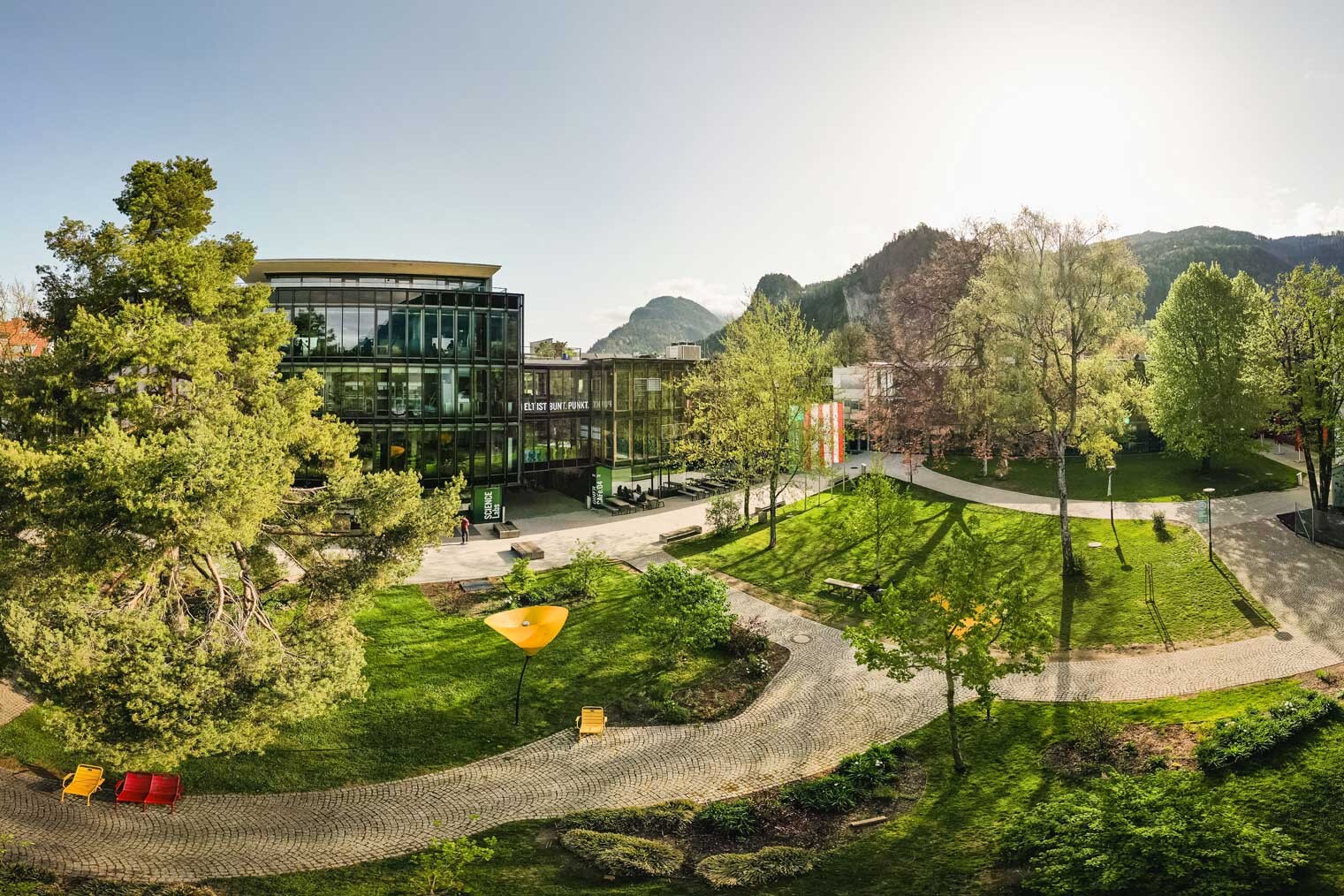
Our full-time bachelor's program combines business fundamentals with real-world experience, enabling you to think analytically, innovatively, and creatively. Join a forward-thinking community in the exciting fields of sport, culture and event management!

Sports, Culture & Event Management
Bachelor's degree program
Overview
-
Qualification Level:
Stufe 1, Bachelor -
Price:
Euro 363,36* (excl. Student Union-fees) each semester -
Academic Degree:
Bachelor of Arts in Business (BA) -
Academic Program:
Full-time -
Language:
75 % German, 25 % English -
Remote Options:
E-Learning max. 30 % online -
Exchange Semester:
Organized semester abroad in the 5th semester, internship in the 6th semester (also possible abroad) -
Admission Requirements:
General admission requirements -
Study Places per Year:
50
Study program accredited by the Agency for Quality Assurance and Accreditation Austria

Program Description


Immerse yourself in a hands-on program with excellent career prospects. Gain specialized skills for the rapidly evolving sports, cultural and event management industries. Benefit from strong connections to the business world through hands-on projects and guest lectures.
The bachelor's degree program in Sports, Culture & Event Management offers comprehensive education for creative and motivated individuals aiming to work in the dynamic fields of sports, culture, or events. The program combines in-depth theoretical and practical management knowledge with specialized skills tailored to these industries. It covers emerging trends such as digitalization, sustainability, and AI, as well as marketing, communication, and social considerations. Partnerships with companies and organizations provide students with valuable networking opportunities early in their studies.
Study Focus
-
22 %
Expert knowledge in sports, culture and event management
-
26 %
Expert knowledge in integrative SCEM
-
13 %
Management skills
-
12 %
Social and methodological skills
-
27 %
Practical transfer & Bachlor thesis
What You Will Learn
-
Sports management and sports science
-
Cultural management and cultural studies
-
General management and business skills
-
Economic and socio-political interrelationships
-
Event management and event sciences
-
Social skills
-
Practical experience
-
Scientific methods
Popular Occupational Fields
- Sports management: sports marketing and sports communications agencies, sports associations, organizing committees of major sporting events, sporting goods industry and trade
- Cultural management: cultural institutions such as museums, opera houses, theaters, concert halls; festivals, film and music industry and creative companies
- Event management: event agencies, conference and convention centers, trade show and convention agencies, corporate marketing departments
Career Opportunities
-
EUR 45,000 average salary
for employees in sports, culture and event management in Austria and Germany
-
over EUR 4 billion market volume
in sports and music events in Austria and Germany
-
over 2 million employees
Event industry in Austria and Germany
-
+11.1 % growth rate
of events worldwide
The path to the Bachelor's Degree

The first semesters establish a solid foundation with business-related subjects and core knowledge in sports, culture, and event management. As the program progresses, the focus shifts to integrative aspects, fostering social skills and creativity.
Students engage in hands-on projects with partners, gaining practical experience in the fields of sports, culture, and events.
Special features:
-
Company and industry networking
-
Practical teaching
-
Semester abroad worldwide
Recognition of Prior Learning
Students have the option to receive credit for skills and competencies they have already acquired before the start of each semester.
To apply for credit, they must submit a request directly to the Director of Studies.
Director of Studies

Asc. Prof. (FH) Mag. Monika Kohlhofer
Director of Studies Bachelor & Master Sports, Culture & Event Management
Curriculum
Course
Semester
ECTS
During their stay abroad at the partner university, the students must complete a course in "Sports, Culture & Events Management" agreed in advance with the Director of Studies by way of the Learning Agreement.
During their stay abroad at the partner university, the students must complete a course in "Area Studies and Languages" agreed with the Director of Studies by way of the Learning Agreement.
During their stay abroad at the partner university, the students must complete a course in "Business Studies" agreed in advance with the Director of Studies by way of the Learning Agreement.
During their stay abroad at the partner university, the students must complete a course in "Current Issues in Sports, Culture & Events Management" agreed in advance with the Director of Studies by way of the Learning Agreement.
Course
Semester
ECTS
External accounting:
• Structure of the accounting system
• Fundamentals of operational accounting: Tasks, sub-areas and basic concepts
• Commercial accounting system: From inventory to opening balance sheet
• Double-entry accounting system: Posting business cases to inventory and profit and loss accounts
• Organization of bookkeeping (chart of accounts, sales tax, etc.)
• Principle of period purity and accruals and deferrals
Internal accounting:
• Objectives and basic concepts of cost and revenue accounting
• Fundamentals of cost and revenue accounting:: Tasks, components and subareas
• Structure of cost accounting (cost elements, cost centers, cost objects)
• Contribution margin accounting
Relation to sports, culture and event management:
• Fundamentals of finance (terms and objectives of financing, financial and liquidity planning)
• Basic forms of participation, self-financing and credit financing
• Application examples for the concepts of accounting and finance
• Case studies
• Overview and context analysis of the most important subareas in business administration
• Subject and fundamentals of business administration in the context of economics:
• Business studies as science and differentiation from economics, management theory and leadership
• Operational functional areas
• Business decision theory
• Fundamentals of Management and Ethics
• Fundamentals of Human Resources and Organization
• Marketing Fundamentals
Fundamentals:
• of the constitutive company decisions such as legal forms, location decisions, types of mergers and acquisitions and choice of business segment
• of the functional business decisions: Materials management, production management, marketing
• of business value creation processes and functions (value creation architecture and structure)
• of market, process and strategy-oriented management
• Analysis and evaluation of case studies
• Business specifics in the field of sports, culture and event management
Core topics:
• Economic thinking and marginal analysis
• Efficient allocation of scarce resources
• The market model and market equilibrium
• Macroeconomic variables (GDP, inflation, and unemployment) and their interrelationships
Selected macroeconomics issues:
• Elasticity and welfare
• Cost functions and optimal corporate production
• Price setting and market structures
• Short-term macroeconomic fluctuations: The business cycle
• Money, the ECB, and inflation
• Long-term economic growth
• International relations and trade
The teaching of marketing fundamentals (definition and application of marketing, dynamics of the marketing environment, consumer behavior, marketing strategies, marketing mix, market and advertising psychology, new media) through theory and case studies. Special features of marketing for sports and cultural institutions.
The course deals with the legal basis with regard to civil and criminal law issues with special consideration of the problems relevant to event law.
The different fields of law and their relations to each other, the demarcation between public and private law and the definition of legal concepts form the basis for legal relations.
Introduction to general contract law as well as the legal capacity of natural and legal persons are taken into account.
Legal issues are of particular importance due to the comprehensive legal relevance as well as legal consequences in the event business. General contract and company law, the legal capacity of natural and legal persons to act, as well as provisions relating to nature conservation, the protection of minors, labor law, building regulations and other legal areas relevant to events are playing an increasingly important role in event management, in particular due to the extensive regulations relating to liability and damages.
The course follows the logic of the project management process, starting with the fundamentals of project management, the definition of projects and the differences that occur in reality.
A general project management methodology will be introduced and specific methodologies will be examined.
The students will set up model projects in groups based on standard project management practices and develop case studies,
The students learn to apply planning techniques for general projects and special techniques that are applicable to the planning of event projects.
Strategic implications and strategic marketing statements, communication of current marketing trends, target group-oriented design of marketing instruments, modern marketing concepts for product and service marketing, networked marketing and project structures and marketing and project processes.
Course
Semester
ECTS
The Bachelor’s Thesis is a scientific, application- and problem-oriented written work that relates to the subject areas and specializations of the bachelor’s program. Students independently develop a research question and address it using scientific methods and properly cited sources. Within the framework of the bachelor thesis seminar, students receive guidance and support during the preparation of their thesis. The selection of the topic, the structuring of the work, and the scheduling are carried out independently, particularly through critical engagement with possible research questions and hypotheses. Supervisors provide assistance, support methodological issues, and discuss aspects of scientific methodology, formal presentation, and time management.
Course
Semester
ECTS
The course introduces academic research and imparts background and practical knowledge for the preparation of seminar papers. The students acquire an understanding and practical skills for the research, acquisition and evaluation of academic literature as well as the hermeneutic and rational-reconstructive processing of academic texts. In addition, they develop an understanding and practical skills for writing academic texts.
Students select from specialization modules on current topics in sports, cultural, and event management, for example:
• Industry and R&D activities
• Human resources/competencies
• Digital developments in the sports, cultural, and event sectors
• Development of the sports, cultural, and event industries
• Emergence of developments/trends, fashions, and booms
• Identification of developments/trends
• Evaluation of developments
• Economic, political, and social impacts
• Work-life management
• Planning and implementation of future-oriented, interdisciplinary projects
The concepts and methods of qualitative social research are introduced and practiced through interactive activities, in particular conducting interviews and performing thematic analysis. The value of qualitative research, its philosophical underpinnings and alternative data collection methods are also discussed and reflected upon. In the end, students will be able to understand and apply the basic methods of qualitative social research.
To optimally prepare students for challenges in professional life, practice-oriented tasks are worked on in groups, preferably based on assignments from partners in business or public institutions, or through field experience gained under the supervision of the course instructor. Students contribute their previously acquired knowledge and apply it to projects. In addition to deepening and enhancing their subject-specific expertise, complementary competencies such as social skills, teamwork, problem-solving and decision-making competence, risk management, and budgeting competence are also fostered.
Based on a client briefing, students work independently on the assigned projects, receiving guidance from the course instructor only when necessary. Planning, coordination, budgeting, monitoring, evaluation, and final reporting are carried out by the students. The role of the course instructor is focused on project coaching.
- Generative AI as a toolbox for Students
- Basic understanding of Generative AI like Large Language Models (also reasoning models)
- Deployment of AI Agents
- Perception of Gen AI contents through the lens of (pop-) culture
- Ethical implications
Students select from specialization modules on current topics in sports, cultural, and event management, for example:
• Industry and R&D activities
• Human resources/competencies
• Digital developments in the sports, cultural, and event sectors
• Development of the sports, cultural, and event industries
• Emergence of developments/trends, fashions, and booms
• Identification of developments/trends
• Evaluation of developments
• Economic, political, and social impacts
• Work-life management
• Planning and implementation of future-oriented, interdisciplinary projects
The course deals with the concepts and methods of univariate and bivariate quantitative social research. The main topics are descriptive and inferential statistical methods, parametric and non-parametric tests, development and evaluation of surveys, design and use of various scale and rating scale formats, software-supported data set analyses as well as targeted segmentation and interpretation of data.
To optimally prepare students for challenges in professional life, practice-oriented tasks are worked on in groups, preferably based on assignments from partners in business or public institutions, or through field experience gained under the supervision of the course instructor. Students contribute their previously acquired knowledge and apply it to projects. In addition to deepening and enhancing their subject-specific expertise, complementary competencies such as social skills, teamwork, problem-solving and decision-making competence, risk management, and budgeting competence are also fostered.
Based on a client briefing, students work independently on the assigned projects, receiving guidance from the course instructor only when necessary. Planning, coordination, budgeting, monitoring, evaluation, and final reporting are carried out by the students. The role of the course instructor is focused on project coaching.
Within the framework of the Bachelor's Thesis seminar, students are taught what special features empirical work entails and how to create their own empirical work. They have the opportunity to discuss and optimize their theoretical foundation, their methodical approach and their empirical implementation in the context of the Bachelor's Thesis in regular exchanges with the other students. The students receive recommendations and templates for the preparation of their Bachelor's Thesis and thus the corresponding accompanying academic supervision.
The internship complements the students’ theoretical knowledge through practical activities and engagement with real-world professional questions. With a duration of at least 500 hours, it ensures that participants can successfully navigate their entry into a potentially new professional field. During the internship, students have the opportunity to critically reflect on professional processes, workflows, and situations, and to reconsider them in light of their experiences.
Course
Semester
ECTS
The course combines experiential learning through outdoor and indoor parts with stimulating lectures and reflection. The students see the development of teams in their formations, target perspectives and risks of conflicts and their manifestations. Team leadership, the organization of cooperation and social coherence, temporal phases and the assignment and assessment of roles and their parameters lead to a deeper understanding of success and failure parameters. Outdoor components are reflected and integrated into an overall model.
In addition to press and public relations work, such as structural analyses of various PR departments, students are familiarized with agency work, network structures and virtual news management. Active (press releases, conferences) and passive (interviews, discussions) media work are discussed, practiced and prepared for real implementation using practical examples.
In order to strengthen the practical relevance of the course, public relations work in crisis situations (crisis PR) is also included as teaching content.
Communication within companies, foundations, associations and clubs is also discussed.
In this context, the term corporate identity from the point of view of corporate communication is also presented and the challenge of integrating social media is discussed and reflected upon.
A1 – Beginner
Understand and use familiar, everyday expressions and very simple sentences aimed at satisfying concrete needs. Introduce themselves and others, ask people questions about personal details – e.g., where they live, the people they know, or the things they have – and respond to such questions. Communicate in a simple way if the conversation partners speak slowly and clearly and are prepared to help.
A2 – Elementary Knowledge
Understand sentences and frequently used expressions related to areas of most immediate relevance (e.g., personal and family information, shopping, work, local environment). Communicate in simple and routine tasks requiring a simple and direct exchange of information on familiar and routine matters. Describe in simple terms their background, education, immediate environment, and matters in areas of immediate need.
B1 – Intermediate Language Use
Use clear standard language in academic and business contexts and communicate about familiar topics related to work, school, leisure, etc., applying relevant conversational skills. Express themselves simply and coherently on familiar topics and areas of personal interest. Report on experiences and events, describe dreams, hopes, and ambitions, and briefly give reasons and explanations for opinions and plans.
B2 – Independent Language Use
Express themselves on the main ideas of complex texts on both concrete and abstract topics in academic and business contexts and participate in technical discussions in their own field of specialization. Communicate with such a degree of fluency and spontaneity that normal conversation with native speakers is quite possible without strain for either party. Express themselves clearly and in detail on a wide range of subjects, explain a viewpoint on a topical issue, and outline the advantages and disadvantages of various options.
C1 – Advanced Language Proficiency
Understand a wide range of demanding, longer texts and recognize implicit meanings. Use the language effectively and flexibly in academic and business contexts and express themselves fluently and spontaneously without much obvious searching for words. Produce clear, well-structured, detailed text on complex subjects, showing controlled use of organizational patterns, connectors, and cohesive devices.
C2 – Near-Native Proficiency
Communicate effortlessly in all language situations. Summarize information from various written and spoken sources and reconstruct arguments and accounts in a coherent presentation. Express themselves spontaneously, very fluently, and precisely, differentiating finer shades of meaning even in more complex situations.
Storytelling is a strategic narrative method in which targeted messages are communicated in the form of a story. Fact-based content is presented in an emotional way so that the information is stored in the recipient's memory for a long time. Storytelling is playing an increasingly important role in the cultural sector as well as in the sports and events sector. In the cultural sector, the primary focus is on developing formats that present cultural memory content in an exciting way, either in analog or digital space, and make it accessible in an innovative way. In the sports sector, the primary focus is on using inspiring and/or touching stories about athletes, teams, competitions, or fans to evoke emotions, create identification, and build long-term audience loyalty. In the events industry, storytelling is increasingly being used in product presentations and other business events, primarily to create exciting experiences and opportunities for identification.
In the course, students develop their own storytelling formats for the cultural and sports sectors and implement them themselves, from theoretical conception to practical realization.
A1 – Beginner
Understand and use familiar, everyday expressions and very simple sentences aimed at satisfying concrete needs. Introduce themselves and others, ask people questions about personal details – e.g., where they live, the people they know, or the things they have – and respond to such questions. Communicate in a simple way if the conversation partners speak slowly and clearly and are prepared to help.
A2 – Elementary Knowledge
Understand sentences and frequently used expressions related to areas of most immediate relevance (e.g., personal and family information, shopping, work, local environment). Communicate in simple and routine tasks requiring a simple and direct exchange of information on familiar and routine matters. Describe in simple terms their background, education, immediate environment, and matters in areas of immediate need.
B1 – Intermediate Language Use
Use clear standard language in academic and business contexts and communicate about familiar topics related to work, school, leisure, etc., applying relevant conversational skills. Express themselves simply and coherently on familiar topics and areas of personal interest. Report on experiences and events, describe dreams, hopes, and ambitions, and briefly give reasons and explanations for opinions and plans.
B2 – Independent Language Use
Express themselves on the main ideas of complex texts on both concrete and abstract topics in academic and business contexts and participate in technical discussions in their own field of specialization. Communicate with such a degree of fluency and spontaneity that normal conversation with native speakers is quite possible without strain for either party. Express themselves clearly and in detail on a wide range of subjects, explain a viewpoint on a topical issue, and outline the advantages and disadvantages of various options.
C1 – Advanced Language Proficiency
Understand a wide range of demanding, longer texts and recognize implicit meanings. Use the language effectively and flexibly in academic and business contexts and express themselves fluently and spontaneously without much obvious searching for words. Produce clear, well-structured, detailed text on complex subjects, showing controlled use of organizational patterns, connectors, and cohesive devices.
C2 – Near-Native Proficiency
Communicate effortlessly in all language situations. Summarize information from various written and spoken sources and reconstruct arguments and accounts in a coherent presentation. Express themselves spontaneously, very fluently, and precisely, differentiating finer shades of meaning even in more complex situations.
The general presentation techniques and the forms of communication as well as the communication models are described and worked out.
The characteristics of an message exchange ( message: sender - receiver) are presented.
The distinction between verbal and non-verbal communication (facial expressions, gestures, rhetoric, body language, etc.) in oneself and in others is shown.
Special attention is given to intercultural communication and negotiation techniques and their difficulties and traps.
The principles of presentation are presented.
Course
Semester
ECTS
The introduction to cultural management focuses on the cultural sector in its structures, contexts, framework conditions and modes of operation. This includes producing, mediating, exploiting and preserving institutions as well as their goals and purposes according to the three-sector model. The tasks specific to the cultural sector such as copyright regulations, professions and working conditions are presented as well as the role of interest groups and the influential interrelationship between cultural management and cultural policy. Finally, it introduces the field of digitalization in the cultural sector and ethical references for action such as human rights.
The teaching content of this introductory basis is based on fundamental concepts, definitions and types of events - building on the history of development and future trends in the event business, the role of the various events within internal and external corporate communication as well as their sociological significance in society is examined.
Events are subdivided into their different manifestations and their different significance in the marketing mix of the companies is shown.
The phases of event organization and design are shown.
Cross-event management, risk management and environmental and safety management are presented.
Concepts for business events are developed, planning explained and the logistics behind events explored.
Cultural Studies I introduces the fundamentals of cultural studies contexts and establishes a frame of reference for cultural management. The seminar offers a basic introduction to key concepts, historical developments, and methodological approaches in cultural studies. The focus is on examining the concept of culture in all its complexity and mutability: from classical definitions to current, decolonial perspectives.
In addition to an introduction to cultural history and the analysis of cultural practices, fundamental methods such as discourse analysis and semiotics are covered, which enable the systematic examination of cultural meaning production. Furthermore, the field of memory culture is presented as a central arena for negotiating questions of cultural identity and discussed with all its social and political implications. Another focus is on questions of mediality: How do media shape our cultural ideas and how do they change the way culture is communicated and remembered — especially in the age of artificial intelligence? In each section, the seminar combines theoretical reading with the analysis of concrete case studies from literature, film, art, pop culture, and everyday practices.
Basic concepts and theories of sport management are covered. This includes an introduction to the environment of sport management, the comparison of different sports systems, the fundamentals of organizational culture, strategic management and special features of personnel management in sport organizations. Central aspects of sports marketing, sports event management and sports tourism are also covered.
The concepts, theories and findings of the history of ideas and culture, sociology, ecology and public health are dealt with - insofar as they relate to the context of sport - and reflected on against the background of potential professional fields. Students experience the complex interplay between the individual and society in sport and its significance for sporting action and sporting structures.
Fundraising in the cultural sector is a key task, as it's what makes cultural offerings and activities possible in the first place. In view of significant budget cuts in public funding, resource scarcity, a growing density of offerings in both the analogue and digital spheres, and changing audiences with the accompanying need to design new program formats, knowledge of different models and strategies is one of the core competencies of cultural managers. In order to do justice to the complex subject area of fundraising in the cultural sector, it is examined on two levels in the seminar:
At the operational level, the focus is on knowledge transfer and the acquisition of practical skills with regard to fundraising and its handling in its various forms and regulations. In particular, funding structures and procedural standards of the public sector as well as the specifics of cultural sponsorship, crowdfunding, and other alternative forms of financing are considered as central pillars of cultural financing and are examined with regard to all their opportunities and limitations. On the conceptual and ideological meta-level, insights gained from broader contexts are decisive and are incorporated into the seminar discussion in order to develop critical thinking and confident decision-making skills. The link between public funding and the system of cultural policy or cultural sponsorship and the economic system requires both an examination of the functioning and interests of these two systems, as well as the communication of an understanding of the importance of dialogical structures for social action in the cultural sector.
Financial accounting and budgeting: Preparation of budget and cash flow, break-even analysis
Marketing of events: Segmentation, target group approach, competitive analysis, positioning, marketing mix (9Ps), integrated marketing communication strategy
Follow-up phase of the event organization: Development of follow-up/postprocessing plans in the planning phase
Event evaluation: Purposes, subject matter, methods and phases of event evaluation
Sustainability: Definition of terms, three-pillar model of sustainable development, effects of events on the economy, society and the environment including effects on the infrastructure in the destination, influences on and evaluation methods of environmental, economic and social sustainability of events
Concepts, theories and findings of the marketing of and through sport are discussed and reflected upon. This includes marketing to sports consumers (spectators and participants), positioning, marketing strategy and the marketing mix in/through sport as well as the topic of sport and brand. The opportunities, limits and activation in sports sponsorship, social media marketing and communication as well as the new digital developments in sports marketing are also covered.
The concepts, theories and findings of movement science, training science and sports medicine are discussed and reflected on against the background of potential occupational fields. The students experience the complex interaction of training science processes and physiological structures and their significance for athletic movements and athletic training.
The Cultural Studies II seminar explores key cultural studies issues and theories with a particular focus on their relevance to contemporary social practices. Building on the foundations laid in Cultural Studies I, the seminar examines current theories that understand culture as a multi-perspective and dynamic field of social, media, and economic negotiation processes.
The focus is on cultural studies perspectives on practices in sports, culture, and event management. Furthermore, transcultural and global perspectives are taken into account, especially with regard to their media communication. By repeatedly building bridges between theoretical considerations and concrete fields of work, cultural studies concepts are read and examined for their viability in practice.
The concepts, theories and findings of sports development, sports development planning and sports governance are dealt with and reflected on against the background of potential professional fields. The central players in state sports policy and the basic measures of state sports promotion are analysed. How specific sports development goals are reached through elite sports, events and physical activity promotion are also considered.
The following social science topics are addressed in this course and treated in the context of events:
• Traditions, rituals and rites
• Experience and performance
• Motivation
• Community and society
The cultural sector is currently undergoing a comprehensive transformation process due to profound socio-demographic, technological, and societal changes. One of the central tasks of cultural institutions is to create analog and digital cultural participation opportunities for all members of society. This is partly because traditional audiences have been declining for some time and European societies are becoming more diverse and multifaceted, which cultural institutions must also reflect if they want to reach these underrepresented audiences and contribute to social cohesion. On the other hand, digital offerings from the media industry represent a key competition to local cultural offerings and raise the question of what role highbrow cultural sectors such as publicly funded theaters, concert halls, and museums play in the experience society. At the same time, however, digitization also expands the reception space and reach of cultural offerings and significantly changes user behavior and cultural experience, as the Covid19 pandemic has shown. Who participates in culture and how, what new formats are emerging, and which cultural concepts are empirically relevant are thus becoming crucial research questions for contemporary cultural management. The course therefore deals intensively with these developments and examines a variety of approaches to contemporary cultural mediation work and value creation, ranging from community management and the promotion of democracy to participation and co-creation to gamification and edutainment.
Course
Semester
ECTS
The digitization of the sports industry is covered. In particular, the digital staging of sport, the digital interaction and thus pluralization of communication channels with the sports consumer and the production of new digital sports products are focused on. In addition, it is discussed how the digital infrastructure and digital platform influences the competitive environment of sport.
In the context of cultural management, the consequences of digitization for fictional imaginary worlds in art and culture are outlined. Examples from the fields of virtual reality and social media show the potential of digital technologies for experiencing cultural offerings and the emergence of new audiences. However, the loss of cultural diversity through the algorithmization of knowledge and cultural memory is also being discussed.
In addition, the course deals with the digitization of events. Special focus is placed on the effects of digital technologies on existing and new event formats and on the visitors’ world of experience as well as on the event planning areas of marketing, security, infrastructure and event evaluation.
• Risk management system
• Risk management process: Definition of protection goals, risk identification, risk analysis, risk assessment, possibilities of risk management
• Risk communication
• Human behavior in an emergency (herd behavior, movement patterns, panic situations)
• Methodical fundamentals and contents Safety concept
• Scenario-based and scenario-independent action planning (emergency planning) incl. associated communication concept
• Capacity of event areas: Calculation of area capacities, calculation of required escape route widths, admission management, circulation and downstream planning, barrier and barricade planning
• Information preparation and presentation for visitors
Event-specific problems, including significant influencing factors, are identified and analyzed by means of numerous case studies and videos, and proposed solutions for future prevention are developed.
The course concludes with a simulation game in which situations with emergency and crisis potential are simulated. By experiencing and working through these scenarios, students develop the necessary decision-making and solution skills to manage emergencies during events.
• Expectations and advantages of an exchange semester
• intercultural awareness
• Location analysis / LESCANT model
• Travel tips & resources, culture shocks and re-entry shock
• Countries, partner universities and choices of degree programs, area studies by region
• Cultural Studies
• Cultural analysis
• Cultural policy
The students learn:
Marketing: Role of events in marketing, communication goals and target group, checklists for marketing events, program, time and cost planning
Dramaturgy: The concept of dramaturgy, the inner construction form (focus on storytelling and its explanation from the point of view of neurosciences) and outer construction form (dramaturgy of construction forms with regard to suspense).
Staging: Transmedia storytelling, creativity techniques for the event production, practical development of a production on the basis of group exercises, production possibilities of the event manager, self-production of the event management on site
Screenplay: New forms of event staging (e.g. Events 2.0) and their emergence of new event forms, social media marketing as an event tool, further interactive events 2.0 tools
The concepts, theories and findings of sociology are presented and situated within the background of potential professional fields in the context of sports and cultural management. Key sociological ideas about the structure and evolution of societies are presented and discussed, as are key sociological concepts related to social divisions pertaining to class, status, ethnicity and gender.
The course introduces students to the scope of the global sports industry, including international federations, sport leagues and sports clubs operating in international markets. Students explore international governance frameworks, the role of transnational sport organizations, and other key stakeholders, such as sponsors or media. Topics include different internationalization strategies, sport diplomacy, sport marketing and branding, athlete migration and labor issues, and digitalization strategies across markets. Case studies from different markets illustrate diverse business practices.
The thematic focus on Sports Tourism covers its foundations, forms, and developments from an interdisciplinary perspective. It includes the segmentation of sports tourism target groups, motivation theories, destination and event management, stakeholder analyses, as well as political and societal frameworks. Furthermore, cross-cutting issues are addressed, such as the tourism effects of mega sporting events, sustainable tourism strategies in the tension field between use and protection of natural resources, and the requirements for the development of sports tourism infrastructure. The challenges posed by digitalization, globalization, and climate change in the design and management of sports tourism offerings are also examined.
The thematic focus on Cultural Tourism addresses both challenges and potentials. While conflicts of interest between cultural and tourism institutions particularly require forms of cooperation and tolerance of ambiguity, the potentials of cultural tourism are manifold: through sustainable, inclusive, and authentic offerings, cultural tourism enhances the competitiveness of destinations, supports image transformation, and generates positive socio-cultural and socio-economic effects. As a memory- and experience-intensive form of tourism, it appeals to diverse target groups and can contribute to the internationalization of countries of origin as well as to addressing younger generations. In destinations without traditional tourism features such as mountains or the sea, cultural tourism enables their upgrading into attractive destinations.
The thematic focus on Event Tourism addresses its foundations, forms, and impacts. It considers the increasing importance of tourism demand in this sector and its role as a central instrument for the profiling of destinations. The complex conflicts of interest between economic goals, urban infrastructure, security requirements, and sustainability aspects are discussed, as well as the potentials of event tourism in strengthening regional value creation, international visibility, and social and cultural vibrancy. In addition, experience design, stakeholder analyses, and legal and political frameworks are explored.
Through case studies and current empirical findings, theoretical approaches are linked with practical applications.
Course
Semester
ECTS
External accounting:
• Structure of the accounting system
• Fundamentals of operational accounting: Tasks, sub-areas and basic concepts
• Commercial accounting system: From inventory to opening balance sheet
• Double-entry accounting system: Posting business cases to inventory and profit and loss accounts
• Organization of bookkeeping (chart of accounts, sales tax, etc.)
• Principle of period purity and accruals and deferrals
Internal accounting:
• Objectives and basic concepts of cost and revenue accounting
• Fundamentals of cost and revenue accounting:: Tasks, components and subareas
• Structure of cost accounting (cost elements, cost centers, cost objects)
• Contribution margin accounting
Relation to sports, culture and event management:
• Fundamentals of finance (terms and objectives of financing, financial and liquidity planning)
• Basic forms of participation, self-financing and credit financing
• Application examples for the concepts of accounting and finance
• Case studies
• Overview and context analysis of the most important subareas in business administration
• Subject and fundamentals of business administration in the context of economics:
• Business studies as science and differentiation from economics, management theory and leadership
• Operational functional areas
• Business decision theory
• Fundamentals of Management and Ethics
• Fundamentals of Human Resources and Organization
• Marketing Fundamentals
Fundamentals:
• of the constitutive company decisions such as legal forms, location decisions, types of mergers and acquisitions and choice of business segment
• of the functional business decisions: Materials management, production management, marketing
• of business value creation processes and functions (value creation architecture and structure)
• of market, process and strategy-oriented management
• Analysis and evaluation of case studies
• Business specifics in the field of sports, culture and event management
The course introduces academic research and imparts background and practical knowledge for the preparation of seminar papers. The students acquire an understanding and practical skills for the research, acquisition and evaluation of academic literature as well as the hermeneutic and rational-reconstructive processing of academic texts. In addition, they develop an understanding and practical skills for writing academic texts.
The course combines experiential learning through outdoor and indoor parts with stimulating lectures and reflection. The students see the development of teams in their formations, target perspectives and risks of conflicts and their manifestations. Team leadership, the organization of cooperation and social coherence, temporal phases and the assignment and assessment of roles and their parameters lead to a deeper understanding of success and failure parameters. Outdoor components are reflected and integrated into an overall model.
In addition to press and public relations work, such as structural analyses of various PR departments, students are familiarized with agency work, network structures and virtual news management. Active (press releases, conferences) and passive (interviews, discussions) media work are discussed, practiced and prepared for real implementation using practical examples.
In order to strengthen the practical relevance of the course, public relations work in crisis situations (crisis PR) is also included as teaching content.
Communication within companies, foundations, associations and clubs is also discussed.
In this context, the term corporate identity from the point of view of corporate communication is also presented and the challenge of integrating social media is discussed and reflected upon.
The introduction to cultural management focuses on the cultural sector in its structures, contexts, framework conditions and modes of operation. This includes producing, mediating, exploiting and preserving institutions as well as their goals and purposes according to the three-sector model. The tasks specific to the cultural sector such as copyright regulations, professions and working conditions are presented as well as the role of interest groups and the influential interrelationship between cultural management and cultural policy. Finally, it introduces the field of digitalization in the cultural sector and ethical references for action such as human rights.
The teaching content of this introductory basis is based on fundamental concepts, definitions and types of events - building on the history of development and future trends in the event business, the role of the various events within internal and external corporate communication as well as their sociological significance in society is examined.
Events are subdivided into their different manifestations and their different significance in the marketing mix of the companies is shown.
The phases of event organization and design are shown.
Cross-event management, risk management and environmental and safety management are presented.
Concepts for business events are developed, planning explained and the logistics behind events explored.
Cultural Studies I introduces the fundamentals of cultural studies contexts and establishes a frame of reference for cultural management. The seminar offers a basic introduction to key concepts, historical developments, and methodological approaches in cultural studies. The focus is on examining the concept of culture in all its complexity and mutability: from classical definitions to current, decolonial perspectives.
In addition to an introduction to cultural history and the analysis of cultural practices, fundamental methods such as discourse analysis and semiotics are covered, which enable the systematic examination of cultural meaning production. Furthermore, the field of memory culture is presented as a central arena for negotiating questions of cultural identity and discussed with all its social and political implications. Another focus is on questions of mediality: How do media shape our cultural ideas and how do they change the way culture is communicated and remembered — especially in the age of artificial intelligence? In each section, the seminar combines theoretical reading with the analysis of concrete case studies from literature, film, art, pop culture, and everyday practices.
Basic concepts and theories of sport management are covered. This includes an introduction to the environment of sport management, the comparison of different sports systems, the fundamentals of organizational culture, strategic management and special features of personnel management in sport organizations. Central aspects of sports marketing, sports event management and sports tourism are also covered.
The concepts, theories and findings of the history of ideas and culture, sociology, ecology and public health are dealt with - insofar as they relate to the context of sport - and reflected on against the background of potential professional fields. Students experience the complex interplay between the individual and society in sport and its significance for sporting action and sporting structures.
The digitization of the sports industry is covered. In particular, the digital staging of sport, the digital interaction and thus pluralization of communication channels with the sports consumer and the production of new digital sports products are focused on. In addition, it is discussed how the digital infrastructure and digital platform influences the competitive environment of sport.
In the context of cultural management, the consequences of digitization for fictional imaginary worlds in art and culture are outlined. Examples from the fields of virtual reality and social media show the potential of digital technologies for experiencing cultural offerings and the emergence of new audiences. However, the loss of cultural diversity through the algorithmization of knowledge and cultural memory is also being discussed.
In addition, the course deals with the digitization of events. Special focus is placed on the effects of digital technologies on existing and new event formats and on the visitors’ world of experience as well as on the event planning areas of marketing, security, infrastructure and event evaluation.
Course
Semester
ECTS
Core topics:
• Economic thinking and marginal analysis
• Efficient allocation of scarce resources
• The market model and market equilibrium
• Macroeconomic variables (GDP, inflation, and unemployment) and their interrelationships
Selected macroeconomics issues:
• Elasticity and welfare
• Cost functions and optimal corporate production
• Price setting and market structures
• Short-term macroeconomic fluctuations: The business cycle
• Money, the ECB, and inflation
• Long-term economic growth
• International relations and trade
The teaching of marketing fundamentals (definition and application of marketing, dynamics of the marketing environment, consumer behavior, marketing strategies, marketing mix, market and advertising psychology, new media) through theory and case studies. Special features of marketing for sports and cultural institutions.
The course deals with the legal basis with regard to civil and criminal law issues with special consideration of the problems relevant to event law.
The different fields of law and their relations to each other, the demarcation between public and private law and the definition of legal concepts form the basis for legal relations.
Introduction to general contract law as well as the legal capacity of natural and legal persons are taken into account.
Legal issues are of particular importance due to the comprehensive legal relevance as well as legal consequences in the event business. General contract and company law, the legal capacity of natural and legal persons to act, as well as provisions relating to nature conservation, the protection of minors, labor law, building regulations and other legal areas relevant to events are playing an increasingly important role in event management, in particular due to the extensive regulations relating to liability and damages.
Students select from specialization modules on current topics in sports, cultural, and event management, for example:
• Industry and R&D activities
• Human resources/competencies
• Digital developments in the sports, cultural, and event sectors
• Development of the sports, cultural, and event industries
• Emergence of developments/trends, fashions, and booms
• Identification of developments/trends
• Evaluation of developments
• Economic, political, and social impacts
• Work-life management
• Planning and implementation of future-oriented, interdisciplinary projects
Fundraising in the cultural sector is a key task, as it's what makes cultural offerings and activities possible in the first place. In view of significant budget cuts in public funding, resource scarcity, a growing density of offerings in both the analogue and digital spheres, and changing audiences with the accompanying need to design new program formats, knowledge of different models and strategies is one of the core competencies of cultural managers. In order to do justice to the complex subject area of fundraising in the cultural sector, it is examined on two levels in the seminar:
At the operational level, the focus is on knowledge transfer and the acquisition of practical skills with regard to fundraising and its handling in its various forms and regulations. In particular, funding structures and procedural standards of the public sector as well as the specifics of cultural sponsorship, crowdfunding, and other alternative forms of financing are considered as central pillars of cultural financing and are examined with regard to all their opportunities and limitations. On the conceptual and ideological meta-level, insights gained from broader contexts are decisive and are incorporated into the seminar discussion in order to develop critical thinking and confident decision-making skills. The link between public funding and the system of cultural policy or cultural sponsorship and the economic system requires both an examination of the functioning and interests of these two systems, as well as the communication of an understanding of the importance of dialogical structures for social action in the cultural sector.
Financial accounting and budgeting: Preparation of budget and cash flow, break-even analysis
Marketing of events: Segmentation, target group approach, competitive analysis, positioning, marketing mix (9Ps), integrated marketing communication strategy
Follow-up phase of the event organization: Development of follow-up/postprocessing plans in the planning phase
Event evaluation: Purposes, subject matter, methods and phases of event evaluation
Sustainability: Definition of terms, three-pillar model of sustainable development, effects of events on the economy, society and the environment including effects on the infrastructure in the destination, influences on and evaluation methods of environmental, economic and social sustainability of events
Concepts, theories and findings of the marketing of and through sport are discussed and reflected upon. This includes marketing to sports consumers (spectators and participants), positioning, marketing strategy and the marketing mix in/through sport as well as the topic of sport and brand. The opportunities, limits and activation in sports sponsorship, social media marketing and communication as well as the new digital developments in sports marketing are also covered.
The concepts, theories and findings of movement science, training science and sports medicine are discussed and reflected on against the background of potential occupational fields. The students experience the complex interaction of training science processes and physiological structures and their significance for athletic movements and athletic training.
The Cultural Studies II seminar explores key cultural studies issues and theories with a particular focus on their relevance to contemporary social practices. Building on the foundations laid in Cultural Studies I, the seminar examines current theories that understand culture as a multi-perspective and dynamic field of social, media, and economic negotiation processes.
The focus is on cultural studies perspectives on practices in sports, culture, and event management. Furthermore, transcultural and global perspectives are taken into account, especially with regard to their media communication. By repeatedly building bridges between theoretical considerations and concrete fields of work, cultural studies concepts are read and examined for their viability in practice.
• Risk management system
• Risk management process: Definition of protection goals, risk identification, risk analysis, risk assessment, possibilities of risk management
• Risk communication
• Human behavior in an emergency (herd behavior, movement patterns, panic situations)
• Methodical fundamentals and contents Safety concept
• Scenario-based and scenario-independent action planning (emergency planning) incl. associated communication concept
• Capacity of event areas: Calculation of area capacities, calculation of required escape route widths, admission management, circulation and downstream planning, barrier and barricade planning
• Information preparation and presentation for visitors
Event-specific problems, including significant influencing factors, are identified and analyzed by means of numerous case studies and videos, and proposed solutions for future prevention are developed.
The course concludes with a simulation game in which situations with emergency and crisis potential are simulated. By experiencing and working through these scenarios, students develop the necessary decision-making and solution skills to manage emergencies during events.
Course
Semester
ECTS
The course follows the logic of the project management process, starting with the fundamentals of project management, the definition of projects and the differences that occur in reality.
A general project management methodology will be introduced and specific methodologies will be examined.
The students will set up model projects in groups based on standard project management practices and develop case studies,
The students learn to apply planning techniques for general projects and special techniques that are applicable to the planning of event projects.
Strategic implications and strategic marketing statements, communication of current marketing trends, target group-oriented design of marketing instruments, modern marketing concepts for product and service marketing, networked marketing and project structures and marketing and project processes.
The concepts and methods of qualitative social research are introduced and practiced through interactive activities, in particular conducting interviews and performing thematic analysis. The value of qualitative research, its philosophical underpinnings and alternative data collection methods are also discussed and reflected upon. In the end, students will be able to understand and apply the basic methods of qualitative social research.
To optimally prepare students for challenges in professional life, practice-oriented tasks are worked on in groups, preferably based on assignments from partners in business or public institutions, or through field experience gained under the supervision of the course instructor. Students contribute their previously acquired knowledge and apply it to projects. In addition to deepening and enhancing their subject-specific expertise, complementary competencies such as social skills, teamwork, problem-solving and decision-making competence, risk management, and budgeting competence are also fostered.
Based on a client briefing, students work independently on the assigned projects, receiving guidance from the course instructor only when necessary. Planning, coordination, budgeting, monitoring, evaluation, and final reporting are carried out by the students. The role of the course instructor is focused on project coaching.
A1 – Beginner
Understand and use familiar, everyday expressions and very simple sentences aimed at satisfying concrete needs. Introduce themselves and others, ask people questions about personal details – e.g., where they live, the people they know, or the things they have – and respond to such questions. Communicate in a simple way if the conversation partners speak slowly and clearly and are prepared to help.
A2 – Elementary Knowledge
Understand sentences and frequently used expressions related to areas of most immediate relevance (e.g., personal and family information, shopping, work, local environment). Communicate in simple and routine tasks requiring a simple and direct exchange of information on familiar and routine matters. Describe in simple terms their background, education, immediate environment, and matters in areas of immediate need.
B1 – Intermediate Language Use
Use clear standard language in academic and business contexts and communicate about familiar topics related to work, school, leisure, etc., applying relevant conversational skills. Express themselves simply and coherently on familiar topics and areas of personal interest. Report on experiences and events, describe dreams, hopes, and ambitions, and briefly give reasons and explanations for opinions and plans.
B2 – Independent Language Use
Express themselves on the main ideas of complex texts on both concrete and abstract topics in academic and business contexts and participate in technical discussions in their own field of specialization. Communicate with such a degree of fluency and spontaneity that normal conversation with native speakers is quite possible without strain for either party. Express themselves clearly and in detail on a wide range of subjects, explain a viewpoint on a topical issue, and outline the advantages and disadvantages of various options.
C1 – Advanced Language Proficiency
Understand a wide range of demanding, longer texts and recognize implicit meanings. Use the language effectively and flexibly in academic and business contexts and express themselves fluently and spontaneously without much obvious searching for words. Produce clear, well-structured, detailed text on complex subjects, showing controlled use of organizational patterns, connectors, and cohesive devices.
C2 – Near-Native Proficiency
Communicate effortlessly in all language situations. Summarize information from various written and spoken sources and reconstruct arguments and accounts in a coherent presentation. Express themselves spontaneously, very fluently, and precisely, differentiating finer shades of meaning even in more complex situations.
The concepts, theories and findings of sports development, sports development planning and sports governance are dealt with and reflected on against the background of potential professional fields. The central players in state sports policy and the basic measures of state sports promotion are analysed. How specific sports development goals are reached through elite sports, events and physical activity promotion are also considered.
The following social science topics are addressed in this course and treated in the context of events:
• Traditions, rituals and rites
• Experience and performance
• Motivation
• Community and society
The cultural sector is currently undergoing a comprehensive transformation process due to profound socio-demographic, technological, and societal changes. One of the central tasks of cultural institutions is to create analog and digital cultural participation opportunities for all members of society. This is partly because traditional audiences have been declining for some time and European societies are becoming more diverse and multifaceted, which cultural institutions must also reflect if they want to reach these underrepresented audiences and contribute to social cohesion. On the other hand, digital offerings from the media industry represent a key competition to local cultural offerings and raise the question of what role highbrow cultural sectors such as publicly funded theaters, concert halls, and museums play in the experience society. At the same time, however, digitization also expands the reception space and reach of cultural offerings and significantly changes user behavior and cultural experience, as the Covid19 pandemic has shown. Who participates in culture and how, what new formats are emerging, and which cultural concepts are empirically relevant are thus becoming crucial research questions for contemporary cultural management. The course therefore deals intensively with these developments and examines a variety of approaches to contemporary cultural mediation work and value creation, ranging from community management and the promotion of democracy to participation and co-creation to gamification and edutainment.
• Expectations and advantages of an exchange semester
• intercultural awareness
• Location analysis / LESCANT model
• Travel tips & resources, culture shocks and re-entry shock
• Countries, partner universities and choices of degree programs, area studies by region
• Cultural Studies
• Cultural analysis
• Cultural policy
The students learn:
Marketing: Role of events in marketing, communication goals and target group, checklists for marketing events, program, time and cost planning
Dramaturgy: The concept of dramaturgy, the inner construction form (focus on storytelling and its explanation from the point of view of neurosciences) and outer construction form (dramaturgy of construction forms with regard to suspense).
Staging: Transmedia storytelling, creativity techniques for the event production, practical development of a production on the basis of group exercises, production possibilities of the event manager, self-production of the event management on site
Screenplay: New forms of event staging (e.g. Events 2.0) and their emergence of new event forms, social media marketing as an event tool, further interactive events 2.0 tools
Course
Semester
ECTS
- Generative AI as a toolbox for Students
- Basic understanding of Generative AI like Large Language Models (also reasoning models)
- Deployment of AI Agents
- Perception of Gen AI contents through the lens of (pop-) culture
- Ethical implications
Students select from specialization modules on current topics in sports, cultural, and event management, for example:
• Industry and R&D activities
• Human resources/competencies
• Digital developments in the sports, cultural, and event sectors
• Development of the sports, cultural, and event industries
• Emergence of developments/trends, fashions, and booms
• Identification of developments/trends
• Evaluation of developments
• Economic, political, and social impacts
• Work-life management
• Planning and implementation of future-oriented, interdisciplinary projects
The course deals with the concepts and methods of univariate and bivariate quantitative social research. The main topics are descriptive and inferential statistical methods, parametric and non-parametric tests, development and evaluation of surveys, design and use of various scale and rating scale formats, software-supported data set analyses as well as targeted segmentation and interpretation of data.
To optimally prepare students for challenges in professional life, practice-oriented tasks are worked on in groups, preferably based on assignments from partners in business or public institutions, or through field experience gained under the supervision of the course instructor. Students contribute their previously acquired knowledge and apply it to projects. In addition to deepening and enhancing their subject-specific expertise, complementary competencies such as social skills, teamwork, problem-solving and decision-making competence, risk management, and budgeting competence are also fostered.
Based on a client briefing, students work independently on the assigned projects, receiving guidance from the course instructor only when necessary. Planning, coordination, budgeting, monitoring, evaluation, and final reporting are carried out by the students. The role of the course instructor is focused on project coaching.
Storytelling is a strategic narrative method in which targeted messages are communicated in the form of a story. Fact-based content is presented in an emotional way so that the information is stored in the recipient's memory for a long time. Storytelling is playing an increasingly important role in the cultural sector as well as in the sports and events sector. In the cultural sector, the primary focus is on developing formats that present cultural memory content in an exciting way, either in analog or digital space, and make it accessible in an innovative way. In the sports sector, the primary focus is on using inspiring and/or touching stories about athletes, teams, competitions, or fans to evoke emotions, create identification, and build long-term audience loyalty. In the events industry, storytelling is increasingly being used in product presentations and other business events, primarily to create exciting experiences and opportunities for identification.
In the course, students develop their own storytelling formats for the cultural and sports sectors and implement them themselves, from theoretical conception to practical realization.
A1 – Beginner
Understand and use familiar, everyday expressions and very simple sentences aimed at satisfying concrete needs. Introduce themselves and others, ask people questions about personal details – e.g., where they live, the people they know, or the things they have – and respond to such questions. Communicate in a simple way if the conversation partners speak slowly and clearly and are prepared to help.
A2 – Elementary Knowledge
Understand sentences and frequently used expressions related to areas of most immediate relevance (e.g., personal and family information, shopping, work, local environment). Communicate in simple and routine tasks requiring a simple and direct exchange of information on familiar and routine matters. Describe in simple terms their background, education, immediate environment, and matters in areas of immediate need.
B1 – Intermediate Language Use
Use clear standard language in academic and business contexts and communicate about familiar topics related to work, school, leisure, etc., applying relevant conversational skills. Express themselves simply and coherently on familiar topics and areas of personal interest. Report on experiences and events, describe dreams, hopes, and ambitions, and briefly give reasons and explanations for opinions and plans.
B2 – Independent Language Use
Express themselves on the main ideas of complex texts on both concrete and abstract topics in academic and business contexts and participate in technical discussions in their own field of specialization. Communicate with such a degree of fluency and spontaneity that normal conversation with native speakers is quite possible without strain for either party. Express themselves clearly and in detail on a wide range of subjects, explain a viewpoint on a topical issue, and outline the advantages and disadvantages of various options.
C1 – Advanced Language Proficiency
Understand a wide range of demanding, longer texts and recognize implicit meanings. Use the language effectively and flexibly in academic and business contexts and express themselves fluently and spontaneously without much obvious searching for words. Produce clear, well-structured, detailed text on complex subjects, showing controlled use of organizational patterns, connectors, and cohesive devices.
C2 – Near-Native Proficiency
Communicate effortlessly in all language situations. Summarize information from various written and spoken sources and reconstruct arguments and accounts in a coherent presentation. Express themselves spontaneously, very fluently, and precisely, differentiating finer shades of meaning even in more complex situations.
The general presentation techniques and the forms of communication as well as the communication models are described and worked out.
The characteristics of an message exchange ( message: sender - receiver) are presented.
The distinction between verbal and non-verbal communication (facial expressions, gestures, rhetoric, body language, etc.) in oneself and in others is shown.
Special attention is given to intercultural communication and negotiation techniques and their difficulties and traps.
The principles of presentation are presented.
The concepts, theories and findings of sociology are presented and situated within the background of potential professional fields in the context of sports and cultural management. Key sociological ideas about the structure and evolution of societies are presented and discussed, as are key sociological concepts related to social divisions pertaining to class, status, ethnicity and gender.
The course introduces students to the scope of the global sports industry, including international federations, sport leagues and sports clubs operating in international markets. Students explore international governance frameworks, the role of transnational sport organizations, and other key stakeholders, such as sponsors or media. Topics include different internationalization strategies, sport diplomacy, sport marketing and branding, athlete migration and labor issues, and digitalization strategies across markets. Case studies from different markets illustrate diverse business practices.
The thematic focus on Sports Tourism covers its foundations, forms, and developments from an interdisciplinary perspective. It includes the segmentation of sports tourism target groups, motivation theories, destination and event management, stakeholder analyses, as well as political and societal frameworks. Furthermore, cross-cutting issues are addressed, such as the tourism effects of mega sporting events, sustainable tourism strategies in the tension field between use and protection of natural resources, and the requirements for the development of sports tourism infrastructure. The challenges posed by digitalization, globalization, and climate change in the design and management of sports tourism offerings are also examined.
The thematic focus on Cultural Tourism addresses both challenges and potentials. While conflicts of interest between cultural and tourism institutions particularly require forms of cooperation and tolerance of ambiguity, the potentials of cultural tourism are manifold: through sustainable, inclusive, and authentic offerings, cultural tourism enhances the competitiveness of destinations, supports image transformation, and generates positive socio-cultural and socio-economic effects. As a memory- and experience-intensive form of tourism, it appeals to diverse target groups and can contribute to the internationalization of countries of origin as well as to addressing younger generations. In destinations without traditional tourism features such as mountains or the sea, cultural tourism enables their upgrading into attractive destinations.
The thematic focus on Event Tourism addresses its foundations, forms, and impacts. It considers the increasing importance of tourism demand in this sector and its role as a central instrument for the profiling of destinations. The complex conflicts of interest between economic goals, urban infrastructure, security requirements, and sustainability aspects are discussed, as well as the potentials of event tourism in strengthening regional value creation, international visibility, and social and cultural vibrancy. In addition, experience design, stakeholder analyses, and legal and political frameworks are explored.
Through case studies and current empirical findings, theoretical approaches are linked with practical applications.
Course
Semester
ECTS
During their stay abroad at the partner university, the students must complete a course in "Sports, Culture & Events Management" agreed in advance with the Director of Studies by way of the Learning Agreement.
During their stay abroad at the partner university, the students must complete a course in "Area Studies and Languages" agreed with the Director of Studies by way of the Learning Agreement.
During their stay abroad at the partner university, the students must complete a course in "Business Studies" agreed in advance with the Director of Studies by way of the Learning Agreement.
During their stay abroad at the partner university, the students must complete a course in "Current Issues in Sports, Culture & Events Management" agreed in advance with the Director of Studies by way of the Learning Agreement.
Course
Semester
ECTS
The Bachelor’s Thesis is a scientific, application- and problem-oriented written work that relates to the subject areas and specializations of the bachelor’s program. Students independently develop a research question and address it using scientific methods and properly cited sources. Within the framework of the bachelor thesis seminar, students receive guidance and support during the preparation of their thesis. The selection of the topic, the structuring of the work, and the scheduling are carried out independently, particularly through critical engagement with possible research questions and hypotheses. Supervisors provide assistance, support methodological issues, and discuss aspects of scientific methodology, formal presentation, and time management.
Within the framework of the Bachelor's Thesis seminar, students are taught what special features empirical work entails and how to create their own empirical work. They have the opportunity to discuss and optimize their theoretical foundation, their methodical approach and their empirical implementation in the context of the Bachelor's Thesis in regular exchanges with the other students. The students receive recommendations and templates for the preparation of their Bachelor's Thesis and thus the corresponding accompanying academic supervision.
The internship complements the students’ theoretical knowledge through practical activities and engagement with real-world professional questions. With a duration of at least 500 hours, it ensures that participants can successfully navigate their entry into a potentially new professional field. During the internship, students have the opportunity to critically reflect on professional processes, workflows, and situations, and to reconsider them in light of their experiences.
Study regulations to download
-
Sports, Culture & Event Management
in effect since May 06, 2026, start of study program from academic year 2027/28
- All study regulations
Frequently Asked Questions
What are the benefits of a dual degree?
A dual degree at HOK gives students the opportunity to earn two academic degrees as part of a cooperation with one of our partner universities. It combines studying at HOK with international academic experience, broadens students’ subject-specific and intercultural competencies, and enhances their career prospects in both national and international job markets. Depending on the program, the overall study period is usually extended by one additional semester.
Where can I spend the semester abroad?
We have over 250 partner universities worldwide from which our students can choose. Some partner universities are particularly suitable for students from this degree program, as they offer further content and thus allow students to deepen their skills even further.
How is the semester abroad selected?
The selection is made by the students according to a ranking of their grades in the first two semesters.
Can I also do my internship abroad?
Yes. You can complete your internship either in Austria or abroad. If you choose an international internship, you can also apply for Erasmus+ funding to help cover accommodation and travel costs.
How do I get my internship?
You can organize your internship yourself. You can also find advertised internships in our service area.
Can I work while studying?
Classroom teaching usually occurs from Monday to Friday, occasionally on Saturdays in blocked units. With a significant amount of self-study, students can manage their schedules independently and have the flexibility to work part-time in the industry.